
The Efficiency Imperative: Why Multibusbar Modules (MBB) is Reshaping India’s Solar Economics
The Shift from Volume to Value
India’s renewable energy roadmap is aggressive: a target of 500GW of non-fossil capacity by 2030. However, for solar developers and manufacturers, the challenge has evolved. It is no longer just about producing panels; it is about optimizing yield per square meter. As land acquisition becomes costlier and grid connectivity tightens, efficiency is the new currency.
Enter Multi-Busbar (MBB) technology. By transitioning from traditional 5-busbar ribbons to 9-16 micro-wire systems, the industry is unlocking a dual strategic advantage: reducing silver consumption in manufacturing while driving down the Levelized Cost of Energy (LCOE) for end-users. This isn’t just a technical upgrade; it is the commercial baseline for the next decade of solar infrastructure.
The Technology: A Smarter Way to Capture the Sun
To understand the business impact, we must first simplify the physics. The solar industry has always balanced two goals: Economic (Cheaper) and Eco-friendly (Cleaner). MBB achieves both by redesigning the “roads” electrons travel on.
The Highway Analogy
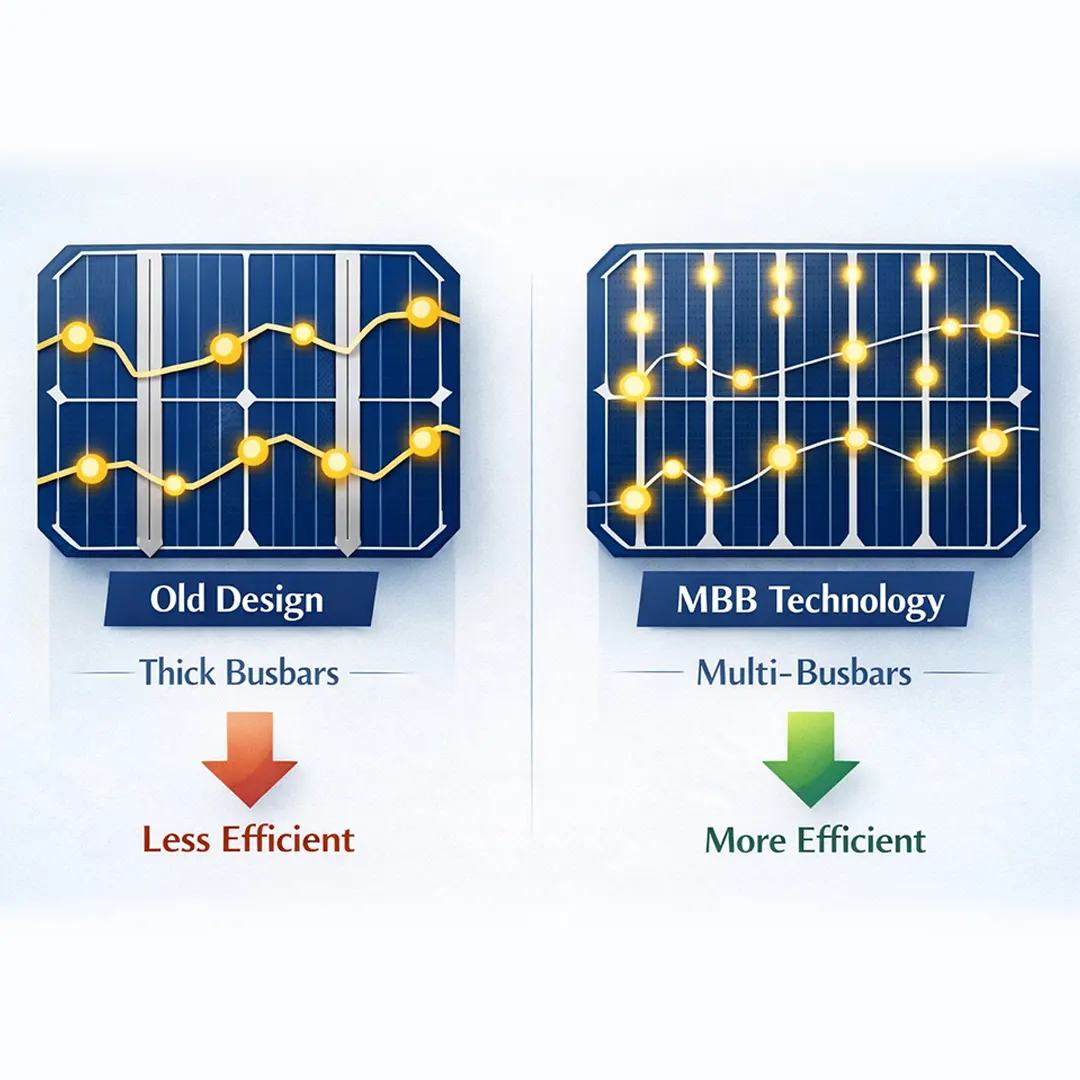
To visualize the impact of this technology, think of a solar cell like a city during rush hour. Older technology (5BB) operates like a city with just a few massive 8-lane highways; while these highways can carry heavy traffic, cars (electrons) must drive long distances to reach them, leading to severe congestion in the form of electrical resistance and heat. The MBB solution effectively re-engineers this infrastructure by replacing those few major highways with 16 smaller, evenly spaced arterial roads. The result is that electrons find an exit significantly faster, “traffic jams” disappear, and the entire system runs cooler and more efficiently.
The Manufacturing Case: Doing More With Less Silver
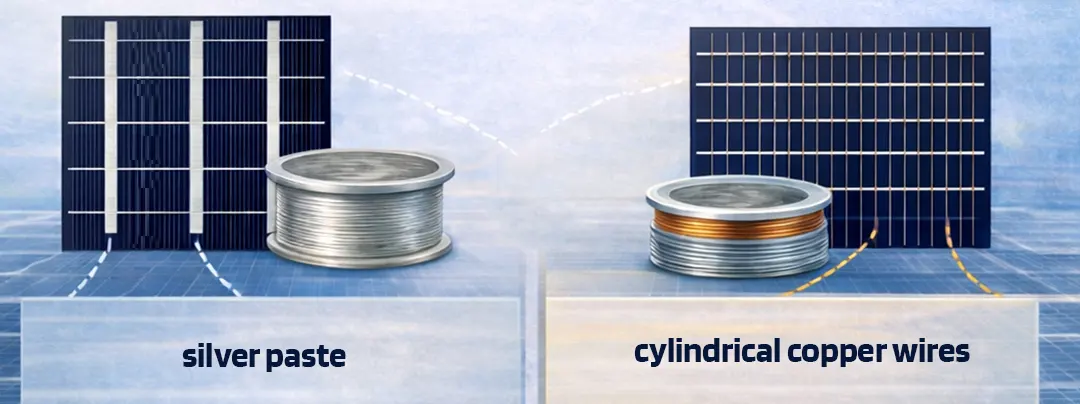
While the physics of MBB may intrigue engineers, its economics are what captivate the CFO. Silver paste represents the second most expensive component of a solar module after silicon, accounting for roughly 10-14% of non-silicon costs. Traditional busbars exacerbate this expense by requiring thick, flat silver ribbons printed onto the cell; in contrast, MBB utilizes ultra-thin, cylindrical copper wires that require significantly less silver paste for soldering. Industry data indicates that this shift can reduce silver consumption by 25-30% per unit. For gigawatt-scale manufacturers like Adani Solar or Waaree, this efficiency is not merely about saving pennies; it translates to millions in protected margins, serving as a critical hedge against raw material volatility in a market where silver prices have recently surged by over 46%.
Performance Strategy: Why “Round” is Better Than “Flat”
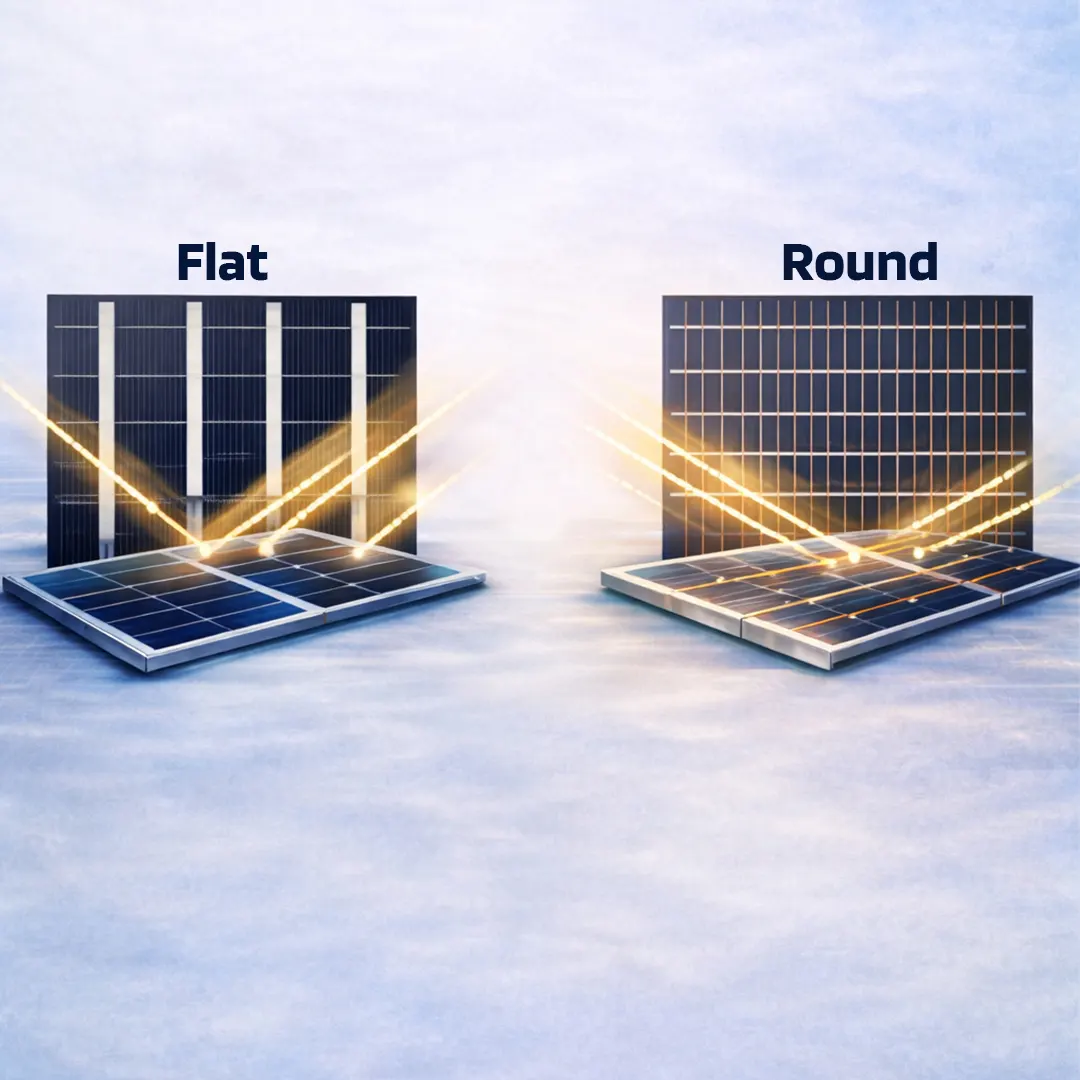
MBB doesn’t just save money on silver; it “harvests” light better.
This optical gain boosts the module’s performance, particularly during early morning and late afternoon hours. For a solar farm developer, this translates to a lower Levelized Cost of Energy (LCOE)—currently hovering around ₹2.3–2.5/kWh in India. Every decimal point of efficiency gained here directly improves the project’s Internal Rate of Return (IRR).
Future-Proofing: The Enabler for TOPCon & HJT
Buying solar technology is a 25-year commitment, and investing in older architectures today creates a significant “stranded asset” risk. The Indian market is rapidly shifting toward TOPCon (Tunnel Oxide Passivated Contact) technology in 2025, driven by its superior efficiency of over 23% compared to older PERC modules. However, there is a critical synergistic link: TOPCon cells are highly sensitive and require the delicate, low-stress interconnection that only MBB provides, meaning one cannot effectively run a modern TOPCon line with obsolete busbar technology. Beyond compatibility, MBB’s dense “web” of wires offers immunity against micro-cracks common in harsh Indian summers. If a fracture occurs, the power simply detours to the next wire, ensuring the asset degrades at merely 0.3% per year compared to the industry standard of 0.5%.
Conclusion
For the Indian solar sector, MBB represents a shift from “Volume” to “Value.” It lowers the manufacturing barrier by reducing silver usage and raises the operational ceiling by boosting yield.
For investors and developers, the verdict is clear: In 2025, MBB is no longer an “experimental upgrade.” It is the prerequisite for competitiveness. As the industry standardizes on TOPCon and HJT, MBB technology will be the quiet backbone supporting India’s 500GW ambition.