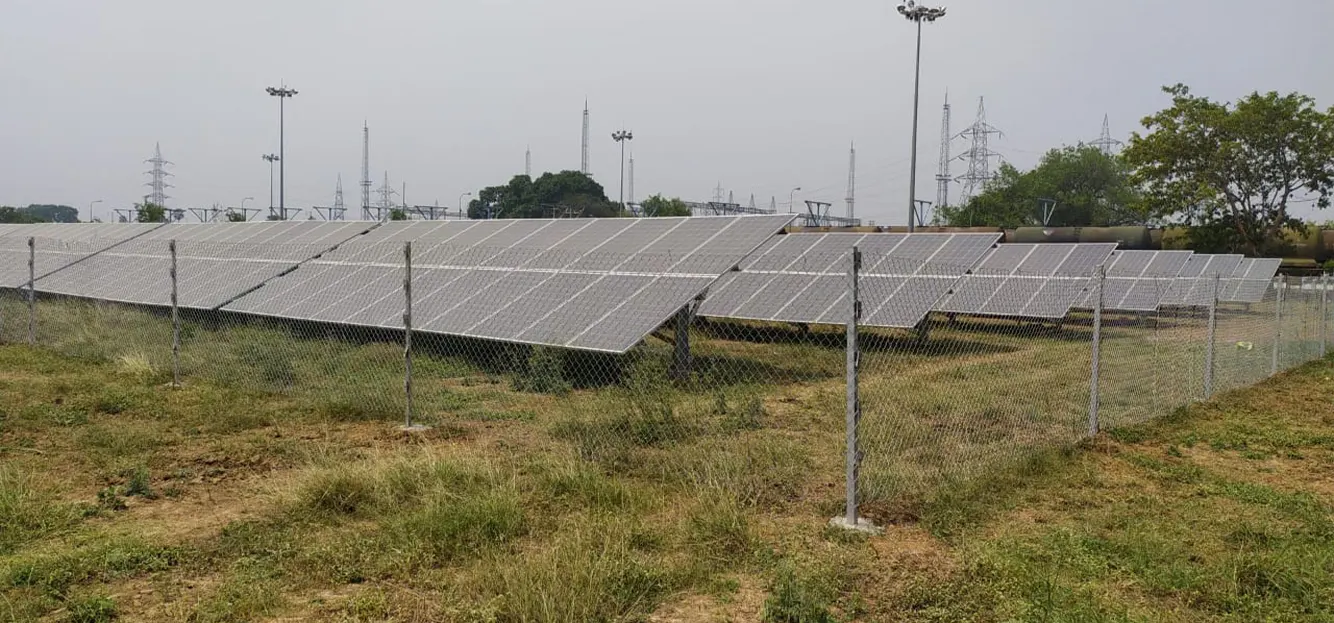
Turning Raw Land into Green Power Plants – 320 kW Solar Installation for HPCL in Uttar Pradesh
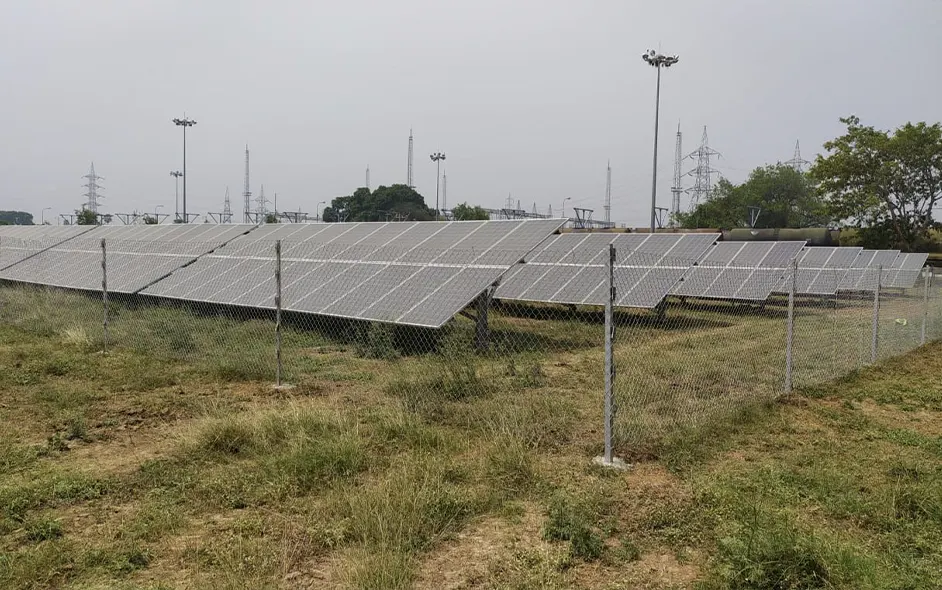
When a major corporation operates massive fuel and distribution facilities, its daily electricity consumption can be staggeringly high. Looking to break free from rising grid costs and reduce its carbon footprint, Hindustan Petroleum Corporation Limited (HPCL) partnered with PIXON to completely revamp how its facilities are powered in Uttar Pradesh. PIXON stepped in to engineer and build a combined 320 kW ground-mounted solar power setup divided across two key locations: HPCL Bheta (200 kW) and HPCL Kanpur (120 kW).
Spreading over a total land footprint of 1,038 square meters, this project demonstrates exactly how industrial giants can turn empty, unutilized plots of raw land into highly productive, money-saving green power plants.
Industrial facilities face high operational energy overhead, leading to massive electricity bills that eat directly into commercial margins. To counter this, the challenge lies in optimizing open ground spaces without limiting core facility operations. Unlike standard rooftop setups, building a solar plant directly on the ground brings distinct challenges.
The designated installation sites presented soft soil, rocky terrain, and drainage vulnerabilities, meaning heavy monsoons could destabilize standard structures and cause ground erosion. Additionally, building full utility support frameworks completely from scratch is typically 10% to 25% more expensive than basic rooftop installations.
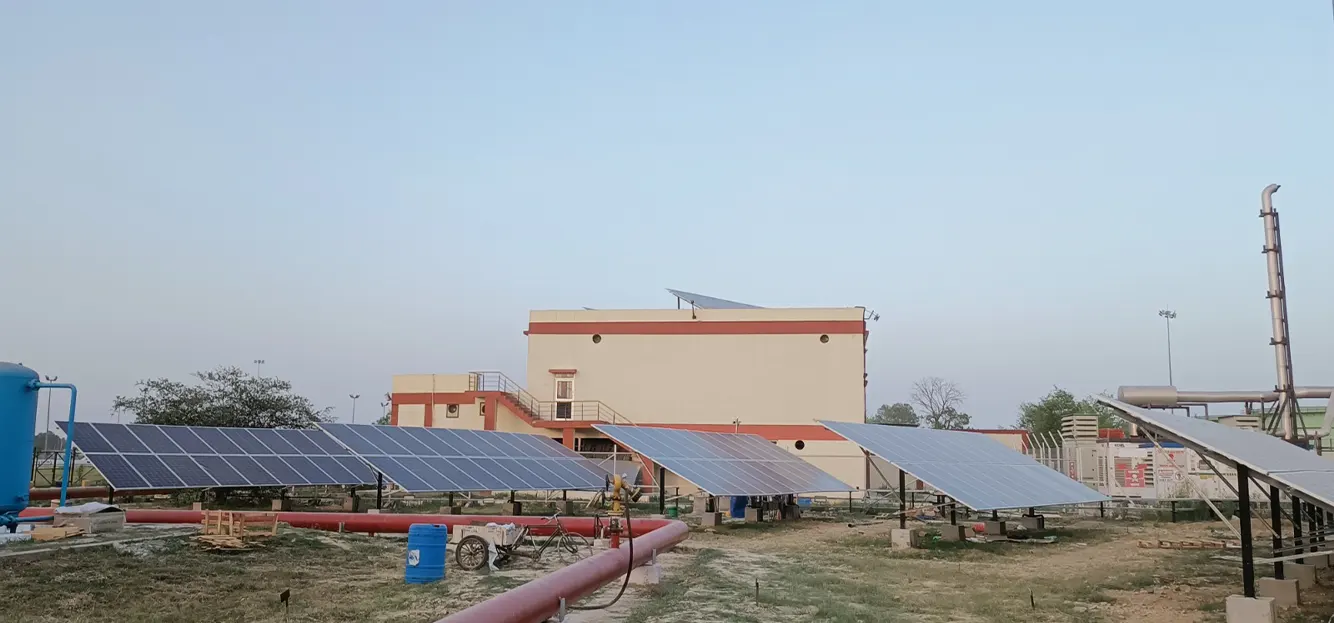
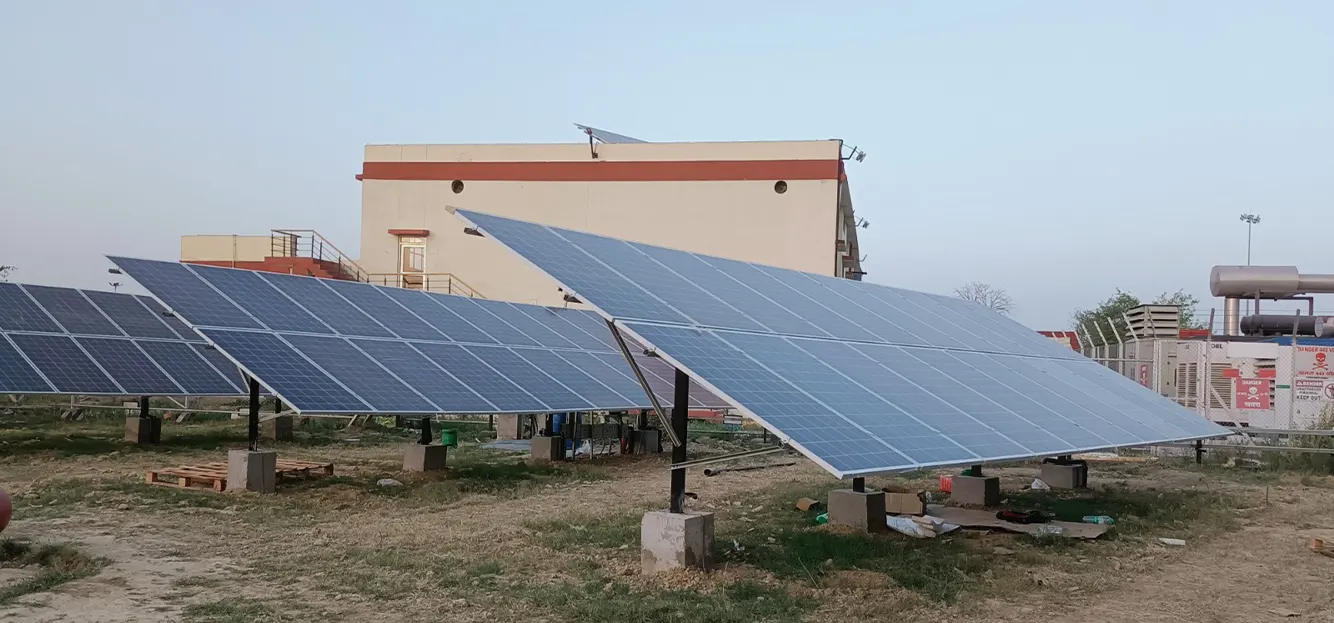
To address these challenges, PIXON deployed robust civil engineering solutions and premium technology to build custom ground-mounted solar structures. To combat unstable soil and monsoon erosion, they anchored the arrays using heavy-duty concrete foundations and piles driven deep into the ground, eliminating the need for a roof. The entire structural framework was custom-engineered to withstand severe weather anomalies like high winds and heavy downpours far better than conventional setups.
Furthermore, by taking full advantage of the open, clear ground space, PIXON precisely tilted and oriented their high-performance PIXON POLY 330 Wp solar modules directly toward the sun’s path, completely unrestricted by building shapes to ensure maximum energy conversion
Despite heavy terrain complexities, PIXON delivered both projects on time, unlocking immediate operational, economic, and environmental advantages. By optimizing solar tilt angles on open ground, the systems achieve 8% to 15% higher energy yields than restrictive rooftops while drastically reducing HPCL’s grid reliance and power expenses. Backed by real-time Online Plant Monitoring, both facilities generate 164,250 Units annually at a low LCOE of ₹1.98 per unit. Environmentally, the Bheta and Kanpur plants collectively prevent over 570 kTons of annual CO2 emissions, conserve 90.1 kTons of coal, and save 9,416 trees each year.
| Sr No | Parameter | Qty | UoM |
|---|---|---|---|
| 1 |
 Project Capacity
|
200 | kW |
| 2 |
 Area Utilized
|
442 | Sq. m. |
| 3 |
 PV Module Type
|
PIXON POLY | 330 Wp |
| 4 |
 Annual Energy Generation
|
164,250 | Units |
| 5 |
 LCOE
LCOE
|
₹1.98 | Unit |
| 6 |
 CO2 Emissions Avoided (Annual)
|
322.5 | KTons |
| 7 |
 Coal Saved (Annual)
|
90.1 | kTons |
| 8 |
 Trees Saved
|
4,708 | Nos. |
| Sr No | Parameter | Qty | UoM |
|---|---|---|---|
| 1 |
Project Capacity
|
120 | kW |
| 2 |
Area Utilized
|
596 | Sq. m. |
| 3 |
PV Module Type
|
PIXON POLY | 330 Wp |
| 4 |
Annual Energy Generation
|
164,250 | Units |
| 5 |
LCOE
|
₹1.98 | /Unit |
| 6 |
CO2 Emissions (Avoided Annual)
|
257.4 | kTons |
| 7 |
Trees Saved
|
4,708 | Nos. |
The successful execution of these ground-mounted installations underscores how major industrial hubs like HPCL can optimize unutilized land to achieve sustainable energy independence. Despite complex terrain constraints and environmental vulnerabilities, PIXON engineered high-yielding, resilient systems that significantly lower grid reliance and power expenses. Ultimately, generating clean power at a remarkably low LCOE while offsetting substantial carbon emissions cements both facilities as prime examples of eco-conscious industrial leadership.