How Solar Adoption Improves ESG Performance
For many businesses, solar energy was once seen mainly as a way to reduce electricity bills. But in 2026, the conversation has changed completely.
Today, solar adoption is becoming part of a company’s ESG strategy, influencing how investors, global buyers, employees, and even customers view a business. Companies are no longer judged only by the products they manufacture, but also by how responsibly they operate.
From export-focused manufacturers to large industrial facilities, businesses are increasingly using solar power to strengthen sustainability goals, improve operational stability, and build a future-ready brand image.
ESG Is No Longer Optional
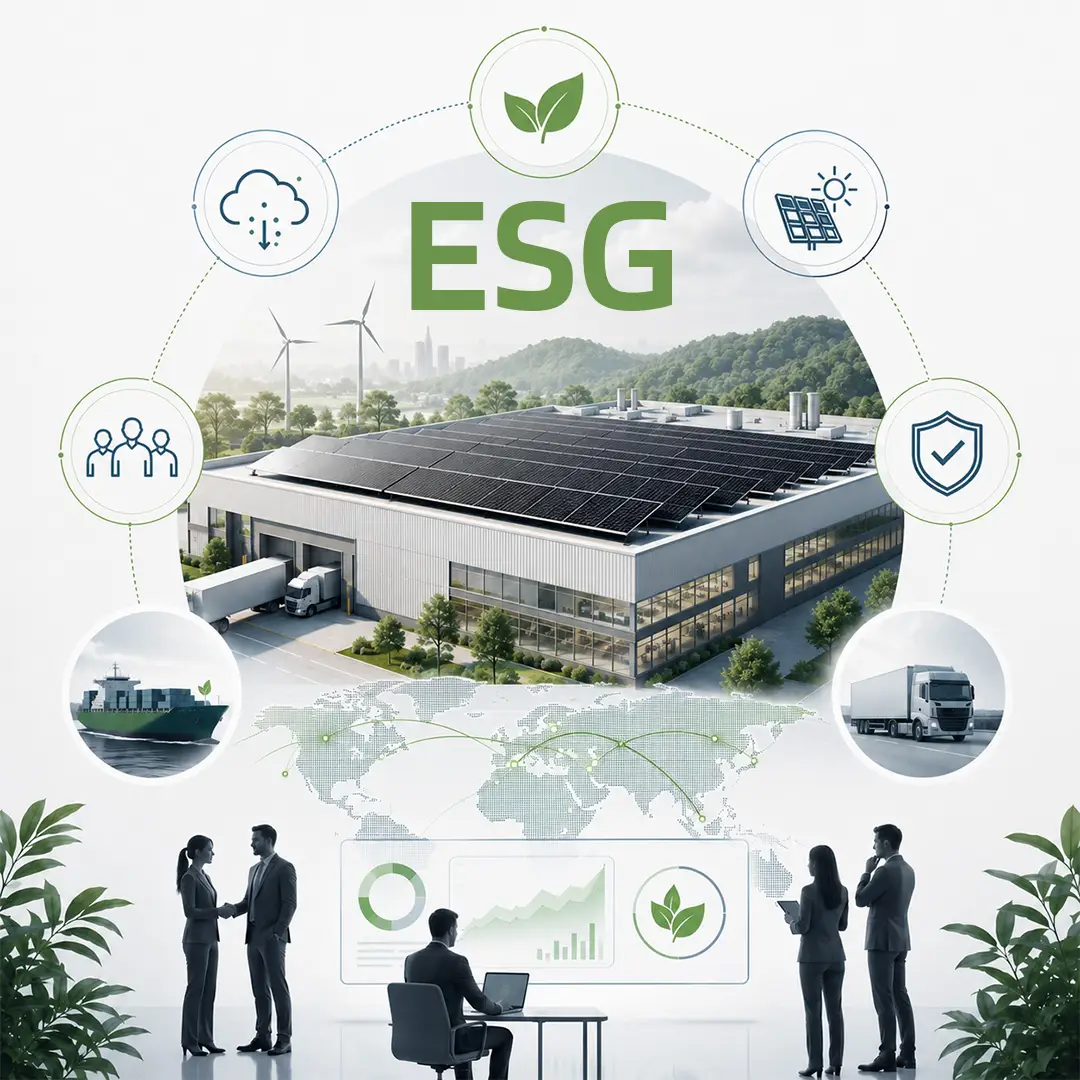
ESG-Environmental, Social, and Governance was once considered a corporate formality. Now, it is becoming a serious business requirement.
Investors, international buyers, and large corporations increasingly evaluate companies based on sustainability performance. Many businesses are expected to provide:
- Carbon reduction data
- Renewable energy usage details
- Sustainability reports
- Emission reduction targets
- Responsible operational practices
This shift is especially visible in industries connected to global supply chains. International clients now prefer suppliers that can demonstrate cleaner manufacturing practices and lower environmental impact.
As a result, solar energy has become one of the most practical and visible ways for businesses to improve ESG performance.
Solar Is a Visible ESG Action

One reason solar adoption stands out is that it is measurable and easy to communicate.
Many sustainability initiatives happen behind the scenes. Solar is different because businesses can visibly show their transition toward cleaner energy.
For example, companies often highlight:
- Rooftop solar installations
- Annual renewable energy generation
- Carbon emission reductions
- Sustainability certifications
- Green manufacturing initiatives
This makes solar highly valuable for ESG presentations, annual reports, investor discussions, and corporate branding.
A factory powered partly by solar power immediately creates a stronger perception of sustainability than businesses still relying entirely on conventional power sources.
Global Buyers Prefer Sustainable Suppliers

Export-oriented industries are facing increasing pressure to reduce emissions across their operations.
Large international companies are now focusing on building cleaner supply chains. This means suppliers are also expected to adopt sustainable practices.
Industries such as:
- Textiles
- Engineering
- Manufacturing
- Chemicals
- Automotive components
We are seeing growing demand for environmentally responsible production.
For these businesses, solar energy is becoming more than an operational decision. It is turning into a competitive requirement.
Companies using renewable energy often appear more future-ready and aligned with global sustainability expectations. This can strengthen relationships with international buyers and improve long-term business opportunities.
ESG Is Becoming a Competitive Advantage

Businesses today compete on more than just price and product quality.
Sustainability performance is increasingly influencing how companies are perceived in the market.
Solar adoption can contribute to:
- Stronger brand reputation
- Better investor confidence
- Improved corporate image
- Easier compliance with future regulations
- Stronger partnerships with sustainability-focused clients
Many investors now evaluate whether companies are prepared for long-term environmental and energy challenges. Businesses that actively invest in renewable energy often appear more stable and forward-thinking.
In many sectors, sustainability is slowly becoming a differentiator rather than just a compliance activity.
Solar Also Supports Better Governance

The “G” in ESG is often overlooked, but energy strategy is becoming an important governance issue.
Businesses are increasingly dealing with:
- Rising electricity costs
- Energy price volatility
- Power supply uncertainties
- Long-term operational risks
Solar energy helps companies create more predictable and stable energy planning.
Instead of relying entirely on fluctuating grid electricity prices, businesses can partially control their energy costs through captive solar generation or open-access solar models.
From a governance perspective, this reflects:
- Better long-term planning
- Risk management
- Operational efficiency
- Financial stability
This is one reason why solar is now viewed not only as an environmental initiative, but also as a smart business strategy.
Sustainability Also Impacts Brand Perception

Employees, younger professionals, and the public are also evaluating modern businesses.
Companies adopting renewable energy often appear:
- Innovative
- Progressive
- Technology-driven
- Future-oriented
This can positively impact employer branding and talent attraction, especially among younger professionals who increasingly value sustainability-conscious workplaces.
On platforms like LinkedIn, businesses frequently showcase solar projects as part of their corporate identity and innovation strategy.
In many cases, solar installations are becoming symbolic of a company’s long-term vision.
Conclusion
Solar adoption is no longer only about reducing electricity expenses.
For modern businesses, it is becoming part of a larger transformation involving sustainability, investor expectations, operational stability, and global competitiveness.
As ESG standards continue to influence industrial growth, solar energy is emerging as one of the most effective and visible ways for companies to demonstrate responsible and future-ready operations.
In 2026, businesses are not only competing on what they produce, but they are also competing on how sustainably they operate.