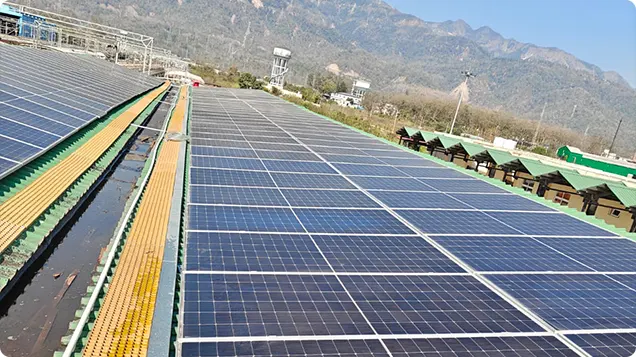
Powering Railway Infrastructure with Sustainable Energy
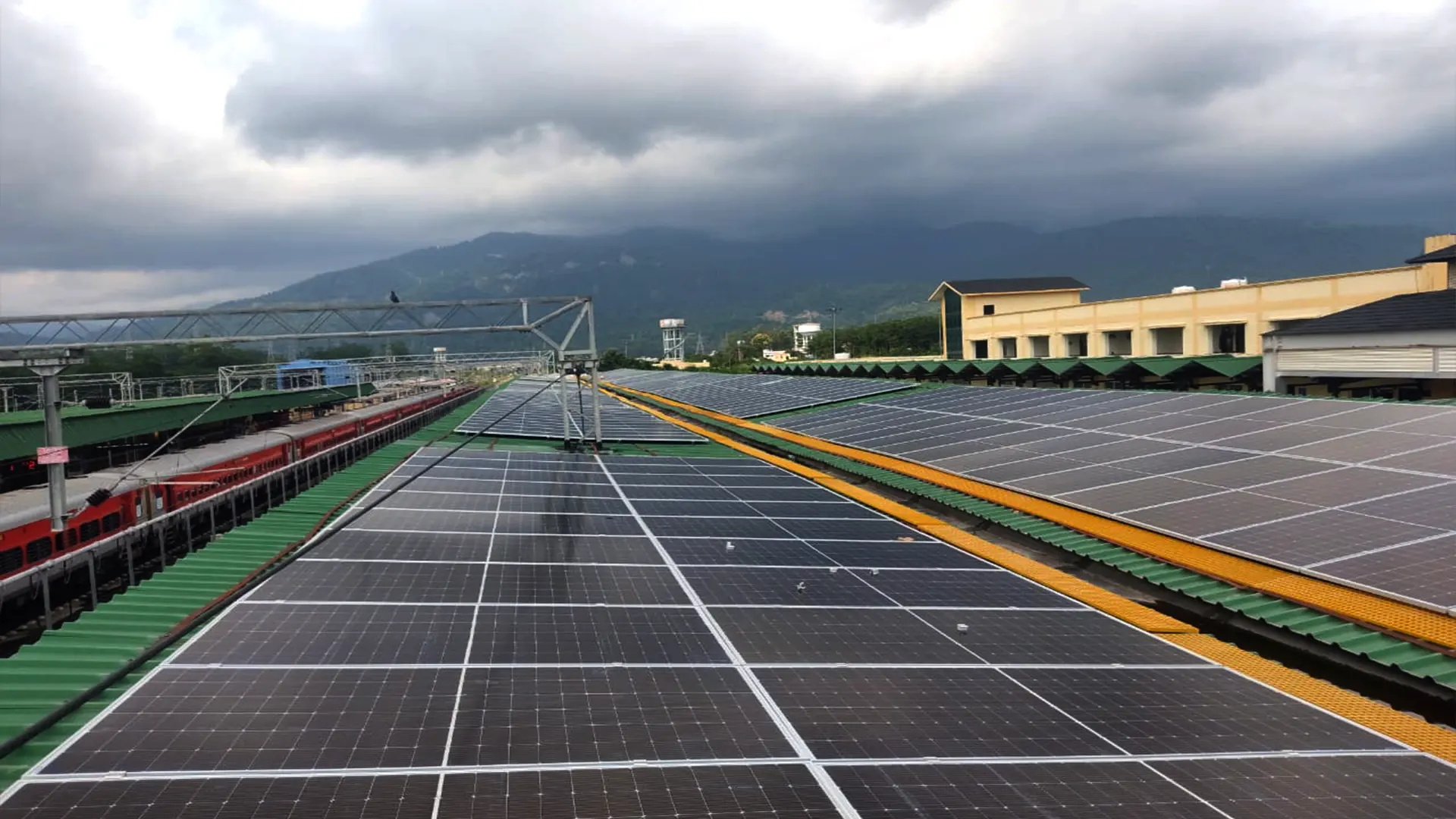
As part of the Indian Railways’ ongoing efforts to adopt renewable energy and reduce operational costs, a 419 kWp rooftop solar power project was implemented across multiple sites under the Moradabad Division. Executed using PIXON solar modules, the project focuses on utilizing available rooftop space within railway facilities to generate clean, reliable power.
This case study highlights how decentralized rooftop solar installations across railway sites can contribute to energy savings, environmental protection, and long-term sustainability while supporting critical public infrastructure.
Implementing a multi-location rooftop solar project within active railway premises presented several on-ground challenges.
The project involved multiple sites with varying capacities, requiring careful planning and coordination to ensure uniform performance and quality across locations. Limited rooftop space at certain stations demanded an optimized system design to maximize output within available areas.
Working within operational railway zones also meant strict adherence to safety regulations, access controls, and execution timelines. Ensuring uninterrupted railway operations while carrying out installations was a key priority throughout the project.
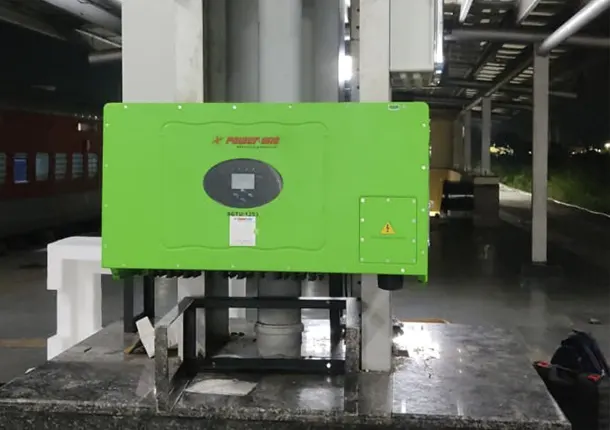
PIXON delivered a well-planned rooftop solar solution tailored to the unique requirements of railway infrastructure.
A total capacity of 419 kWp was installed across multiple locations using PIXON Mono PERC 545 Wp solar modules, known for their efficiency and durability. The systems were designed to make effective use of the available 5,060 sq. m. rooftop area, ensuring stable generation and long-term performance.
The installations were executed with strict safety protocols and minimal disruption to railway activities. Each site was carefully surveyed, and system layouts were customized to match structural conditions and energy needs.
The distributed nature of the project allows for easy monitoring, low maintenance, and reliable operation over the system’s lifetime.
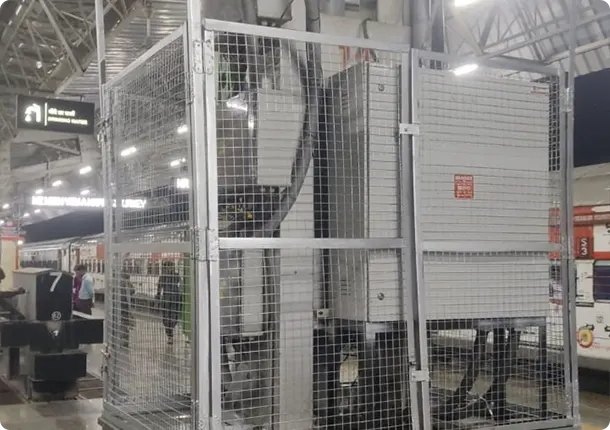
The Moradabad Division Railway rooftop solar project has delivered consistent operational and environmental benefits.
| Sr No | Location | Capacity | UoM |
|---|---|---|---|
| 1 | Aithal | 13 | kWp |
| 2 | Ikkar | 16 | kWp |
| 3 | Lakshar | 79 | kWp |
| 4 | Najibabad | 3 | kWp |
| 5 | Pathri | 16 | kWp |
| 6 | Rishikesh | 235 | kWp |
| 7 | Virbhadra | 47 | kWp |
| Sr No | Parameter | Qty | UoM |
|---|---|---|---|
| 1 |
 Total Project Capacity
|
419 | kWp |
| 2 |
 Area Utilized
|
5,060 | Sq. m. |
| 3 |
 PV Module Type
|
Mono PERC | 545 Wp |
| 4 |
 Daily Generation
|
~1,600 | kWh |
| 5 |
 Annual Energy Generation
|
584,000 | kWh |
| 6 |
 LCOE
LCOE
|
~₹1.1 | /Unit |
| 7 |
 Trees Saved
|
~6,500 | Nos. |
| 8 |
 CO₂ Emissions Avoided (Annual)
|
~1.5 | Metric Tonnes |
The Moradabad Division Railway Rooftop Solar Project demonstrates how public infrastructure can effectively integrate renewable energy into day-to-day operations. By utilizing idle rooftop spaces across multiple railway facilities, the project delivers reliable power, long-term cost savings, and measurable environmental benefits.
With minimal maintenance requirements and a long system life, the installation strengthens energy independence while supporting India’s broader clean energy objectives. This project stands as a practical and scalable model for renewable energy adoption across railway divisions and other large institutional facilities.