From Policy to Production: The Rise of Domestic Solar Manufacturing in India
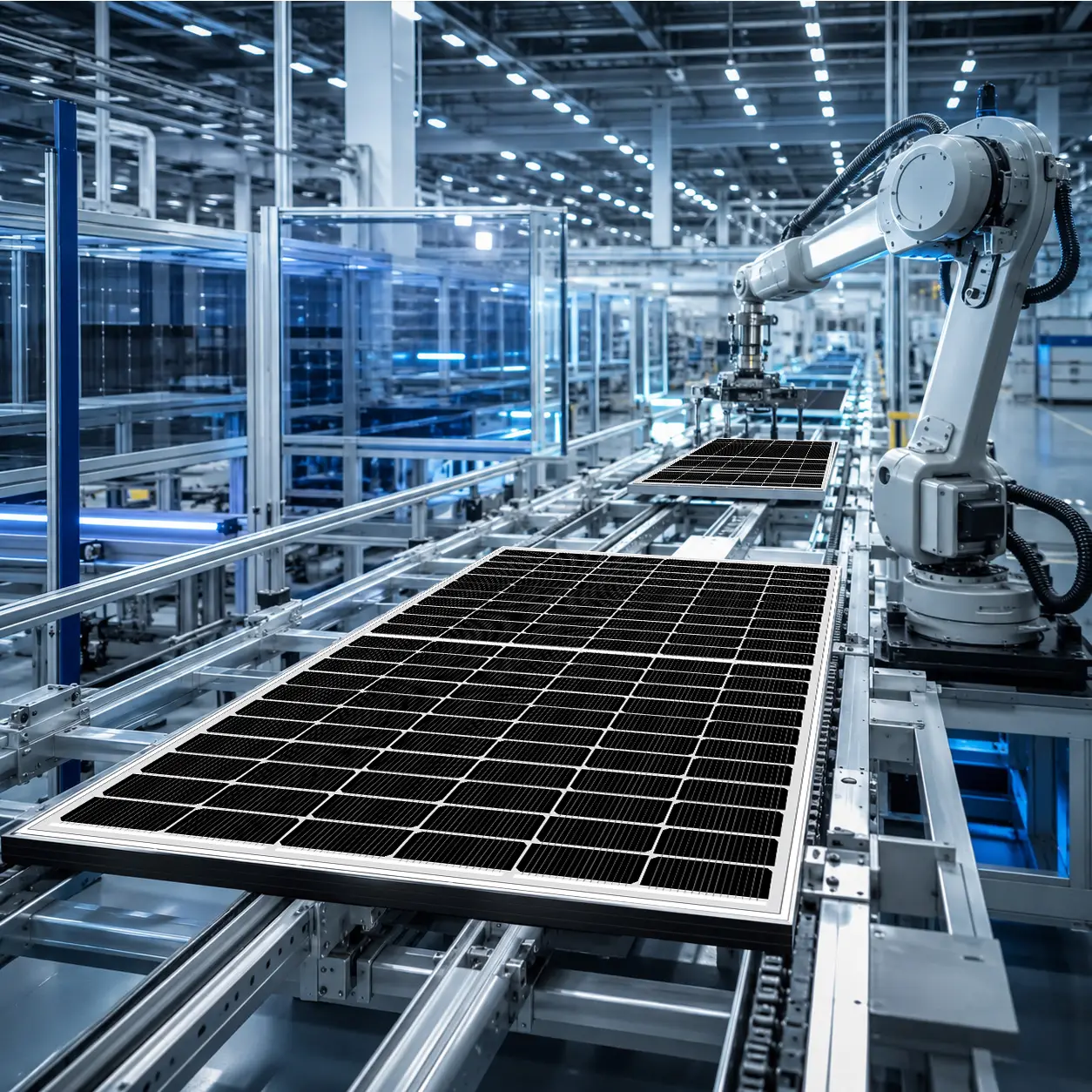
India’s solar sector has moved from being a promising idea to a full-fledged industrial story. A decade ago, the country largely imported solar panels to meet its clean energy targets. Today, domestic solar manufacturing is one of the fastest-growing segments of India’s industrial economy, with module production capacity expanding many times over in just a few years.
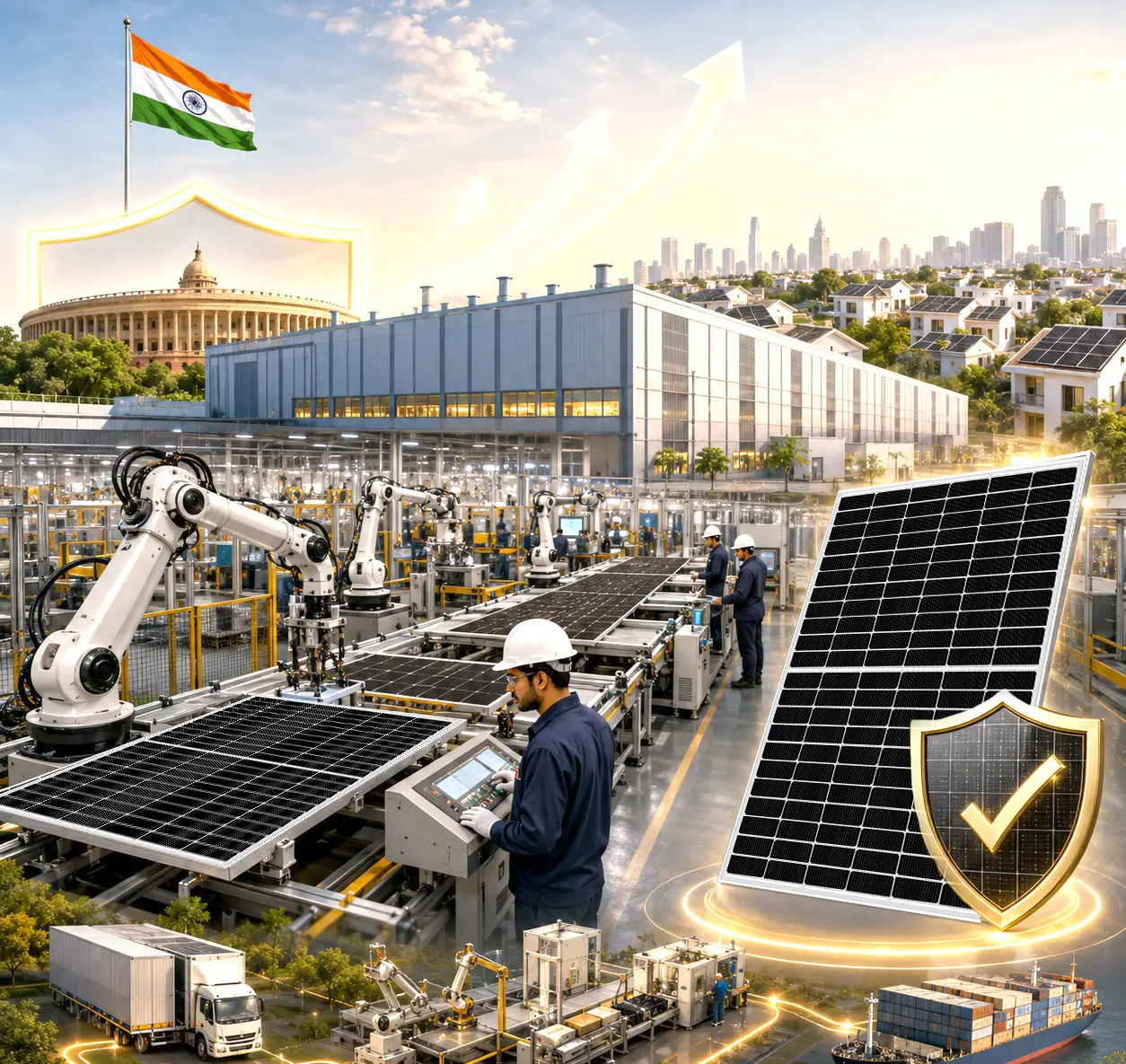
This shift did not happen by chance. It is the result of a deliberate, coordinated policy push designed to reduce import dependence and build a self-reliant solar supply chain. For EPC companies, distributors, developers, and investors, understanding this journey from policy design to factory-floor production is essential to navigating India’s solar market with confidence.
The Policy Push Behind India’s Solar Manufacturing Growth
Production Linked Incentive (PLI) Scheme
The PLI scheme for high-efficiency solar PV modules was introduced to help India build gigawatt-scale, fully integrated manufacturing capacity and reduce dependence on imported cells and modules. Its objective is to encourage genuine cell-to-module integration, not simple assembly, by tying financial incentives to actual production output. Rolled out in two tranches, the scheme has allocated tens of thousands of megawatts of manufacturing capacity to selected companies and has clearly revived investor confidence. That said, capacity commissioning has, in some cases, lagged behind original targets, a reminder that policy intent and on-ground execution take time to align.
Basic Customs Duty (BCD)
BCD was introduced to level the playing field between cheaper imported equipment and domestically produced cells and modules. By making imported solar equipment costlier at the border through duty applied on top of an Agriculture Infrastructure and Development Cess, it gives local manufacturers room to scale without being undercut purely on price. For EPC firms and developers, this means factoring landed import costs more carefully into project bids and pricing models.
Approved List of Models and Manufacturers (ALMM)
The ALMM framework is the quality and sourcing backbone of India’s solar policy, introduced to ensure quality, reliability, and traceability, and to anchor demand toward verified domestic manufacturers rather than unverified imports. It works in two parts:
- ALMM List-I certifies which module models and manufacturers are eligible for government-linked and subsidised projects.
- ALMM List-II extends this requirement one level deeper, to the solar cells inside those modules, mandatory for government-backed, net-metering, and open-access projects, with limited case-by-case exemptions for projects already underway.
This has created short-term supply adjustments, especially for advanced cell technologies, but the long-term intent is clear: build genuine backward integration in India, not just assembly.
PM Surya Ghar: Muft Bijli Yojana, Make in India and Atmanirbhar Bharat
The PM Surya Ghar: Muft Bijli Yojana, aimed at bringing rooftop solar to a crore households, has created sustained demand for ALMM-compliant domestic modules and indirectly strengthened manufacturers’ order books. Broader umbrella initiatives, Make in India and Atmanirbhar Bharat (Self-Reliant India) provide the policy philosophy under which PLI, BCD, ALMM, and the Domestic Content Requirement (DCR) all operate: encouraging local value addition, technological self-sufficiency, and export competitiveness across strategic sectors, including solar.
From Policy to Production: How Manufacturers Responded
Manufacturers have translated this policy push into tangible industrial change. Module manufacturing capacity has grown many times over from pre-2022 levels, and new integrated facilities have come up across multiple states. Companies have invested in automation and stronger quality control and testing processes to meet both ALMM standards and international export benchmarks. There has also been a visible shift toward advanced cell technologies such as TOPCon, HJT (heterojunction), and bifacial modules, reflecting a broader push toward efficiency gains rather than commodity-grade production. R&D investment, while still developing, is gradually increasing as manufacturers compete on performance rather than price alone.
Building a Complete Solar Manufacturing Ecosystem
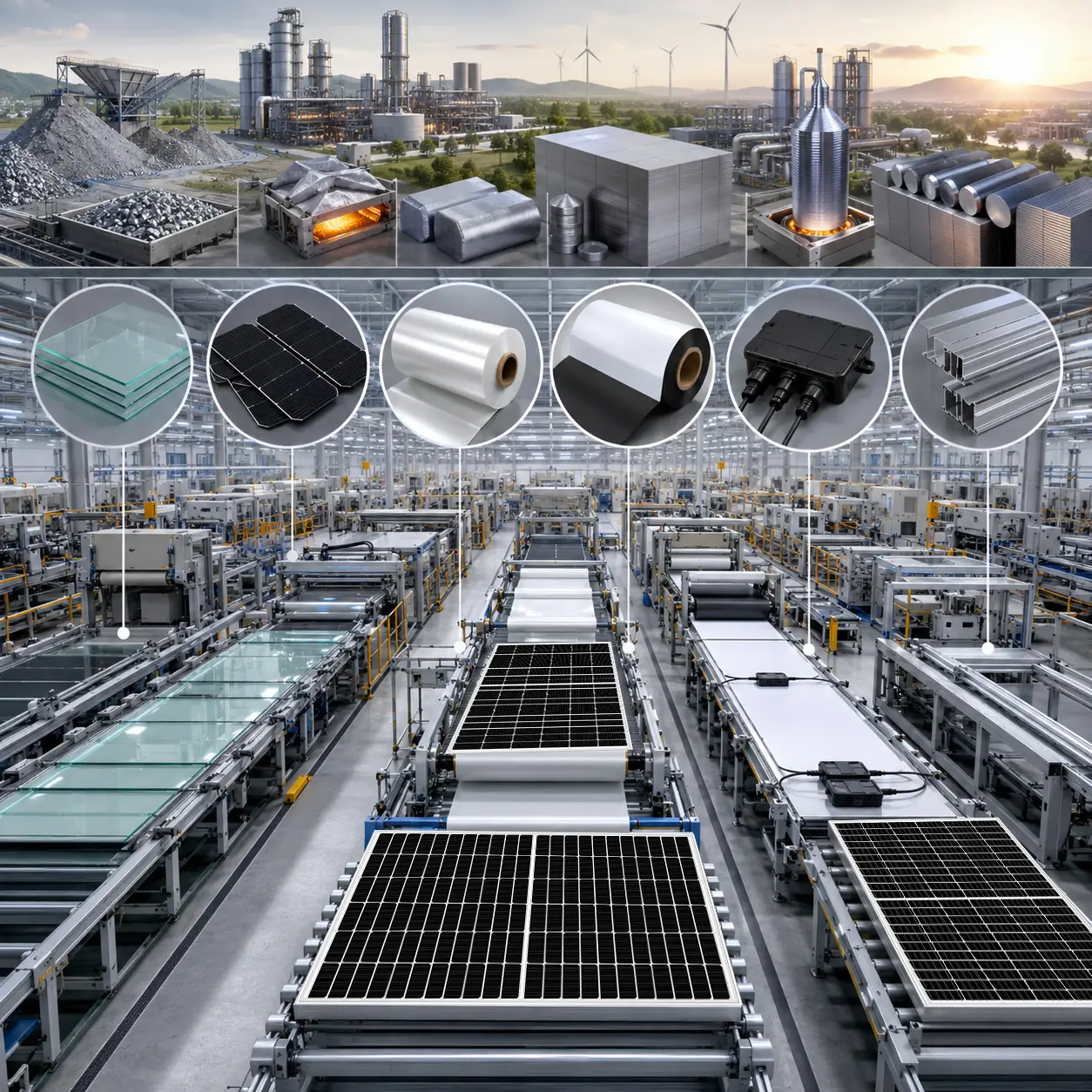
True self-reliance requires more than module assembly. India’s ecosystem now spans:
- Solar modules
- Solar cells
- Solar glass
- EVA encapsulants
- Backsheets
- Junction boxes
- Frames
The next frontier and current gap lies upstream, in wafer and polysilicon manufacturing, where India still depends heavily on imports. Building this integrated value chain matters because it insulates the industry from global price swings, reduces exposure to supply disruptions, and captures more economic value domestically rather than at the margins of assembly.
Industry Impact: Who Benefits from Domestic Solar Manufacturing

The ripple effects extend across the value chain. Manufacturers gain policy-backed demand visibility; EPC companies and developers gain more reliable, quality-assured supply with shorter lead times; distributors benefit from a wider range of certified domestic products; and consumers gain from improved after-sales support. For India’s economy, the benefits include:
- Stronger supply chain resilience
- Job creation across manufacturing and installation
- Improved energy security
- Growing export opportunities
- Rising quality standards aligned with global certification norms
Challenges Ahead for India’s Solar Manufacturing Sector
The story is not without friction. India’s solar cell manufacturing capacity still trails module capacity significantly, particularly for advanced technologies like TOPCon, and wafer and polysilicon production remain nascent, keeping upstream import dependence high. Global pricing competition, especially from established manufacturing hubs, continues to pressure domestic cost competitiveness. Continuous innovation and sustained investment in skilled workforce development will be essential to close these gaps, rather than simply meeting near-term compliance deadlines.
The Road Ahead: India as a Global Solar Manufacturing Hub

India’s long-term ambition extends beyond self-sufficiency toward becoming a credible global manufacturing and export hub. This will require sustained policy support, deeper investment in advanced manufacturing technologies, and a workforce equipped for higher-value production. The direction of travel, however, is well established.
Conclusion
India’s domestic solar manufacturing story is a clear example of policy translating into industrial reality. PLI, BCD, ALMM, and Atmanirbhar Bharat have together shifted the country from import dependence toward a maturing, integrated manufacturing base. Challenges around cell and wafer capacity remain real, but the trajectory from policy design to factory production signals that domestic manufacturing will play a foundational role in India’s clean energy future.