India’s Solar Manufacturing Boom: What’s Really Changing in 2026
A few years ago, India’s solar story was mainly about installation numbers, bigger solar parks, rising rooftop adoption, and ambitious renewable energy targets.
But in 2026, the conversation is changing
India is now focusing on something much bigger: building its own solar manufacturing ecosystem. Instead of depending heavily on imported equipment, the country is rapidly expanding domestic production of solar modules, cells, and next-generation technologies.
Across states like Gujarat and Tamil Nadu, new factories are being developed, manufacturing capacity is increasing, and Indian companies are preparing to compete on a global level.
This shift is not just transforming the renewable energy sector. It is reshaping manufacturing, technology, exports, and industrial growth across the country.
India Is Moving From Import Dependence to Domestic Manufacturing
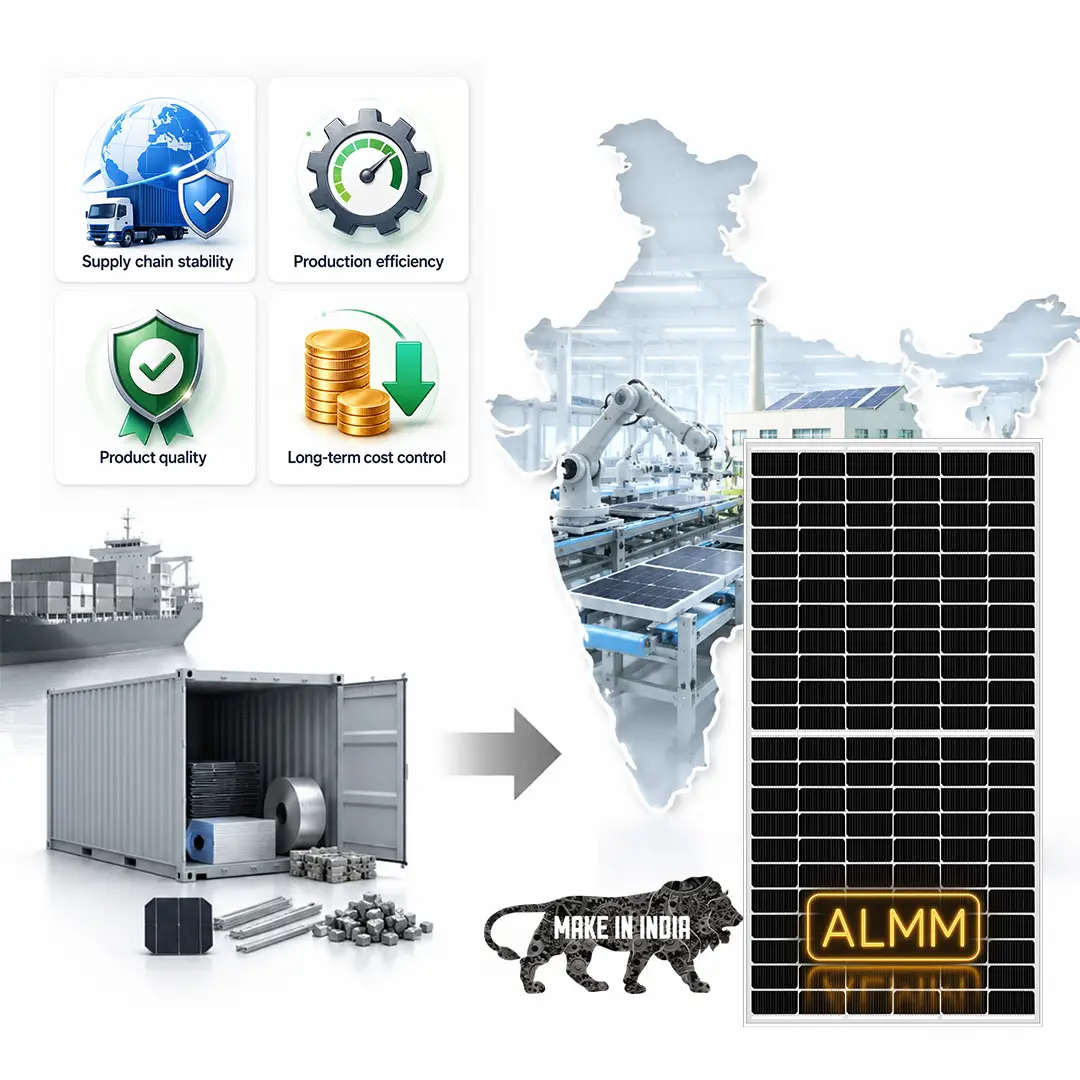
For years, India relied heavily on imported solar components, especially from China. While the country became one of the fastest-growing solar markets in the world, much of the manufacturing remained outside India.
That is now changing rapidly.
Government initiatives supporting domestic manufacturing are encouraging companies to invest in large-scale production facilities within India.
Some major drivers behind this shift include:
- “Made in India” manufacturing push
- ALMM support and policy changes
- Production Linked Incentive (PLI) schemes
- Import duties on foreign solar modules
- Rising demand for domestic supply chains
Manufacturers are also moving beyond basic module assembly to integrated manufacturing, where cells, wafers, and modules are produced within a single ecosystem.
This helps improve:
- Supply chain stability
- Production efficiency
- Product quality
- Long-term cost control
India is no longer focusing only on installing solar projects. It is building the infrastructure to manufacture solar technology at scale.
Gujarat Is Emerging as a Major Solar Manufacturing Hub
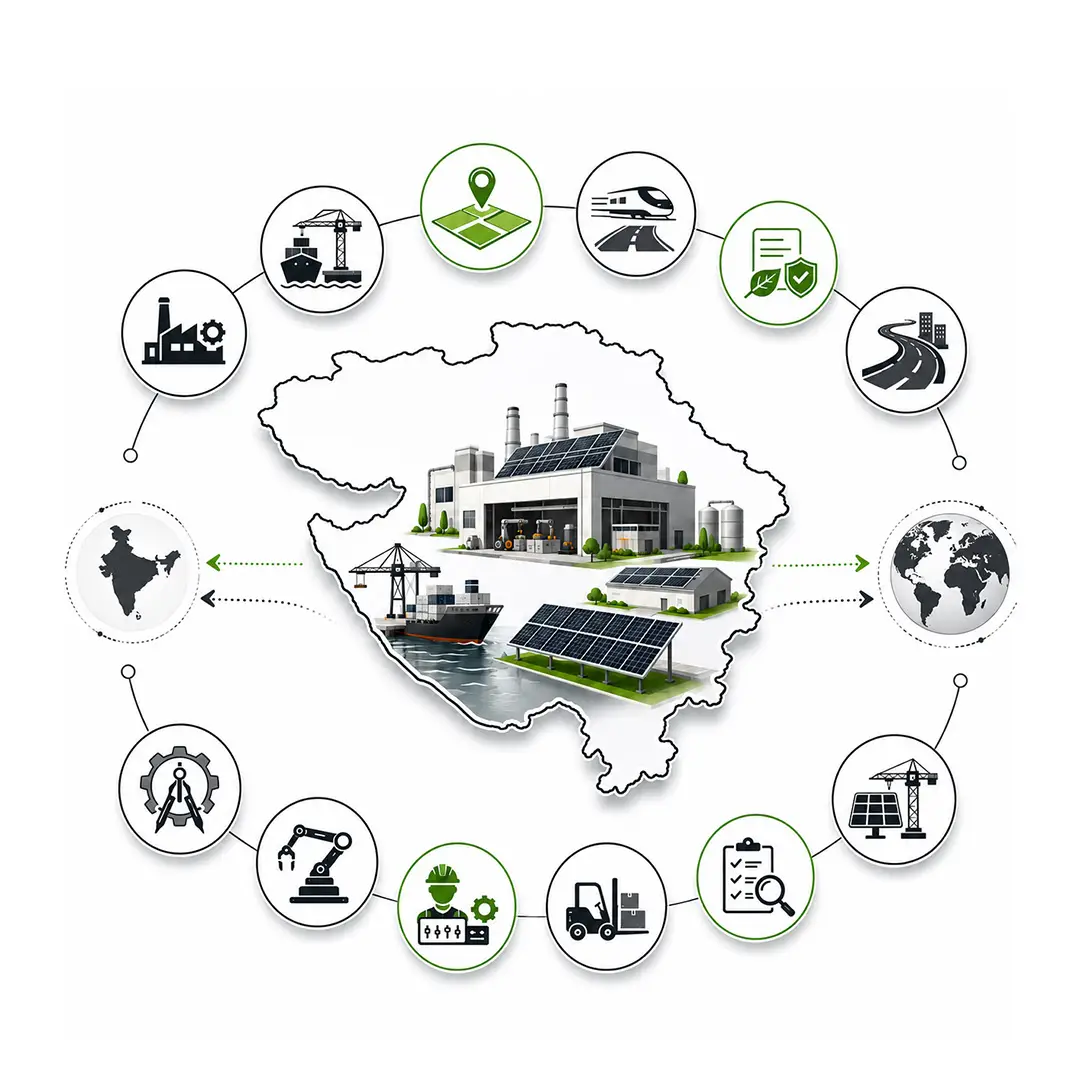
In 2026, Gujarat is quietly becoming one of India’s strongest solar manufacturing centers.
The state offers several advantages that make it attractive for large-scale solar manufacturing:
- Strong industrial infrastructure
- Better connectivity through ports and logistics
- Availability of large industrial land parcels
- Faster transportation access
- Renewable energy-focused policies
- Expanding industrial corridors
As a result, more manufacturers are setting up facilities across the state to serve both domestic and international markets.
The growth is also contributing to employment generation across sectors like:
- Engineering
- Automation
- Plant operations
- Logistics
- Quality testing
- Project development
Gujarat’s role in the solar sector is evolving from being only a renewable energy state to becoming a manufacturing powerhouse
Solar Manufacturing Is Now a Technology Race
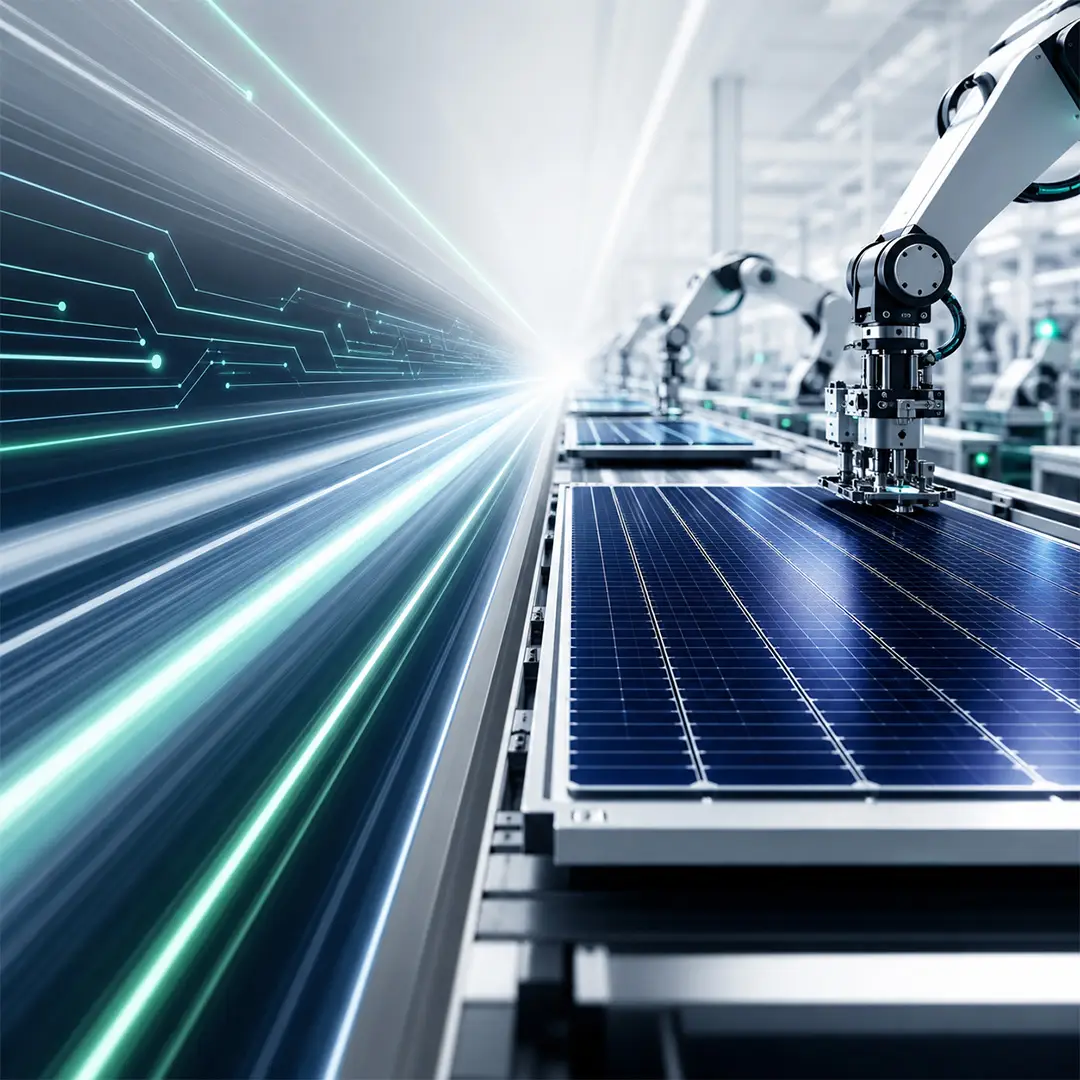
The solar industry in 2026 is no longer competing only on pricing.
Manufacturers are now competing on:
- Efficiency
- Technology
- Reliability
- Automation
- Production scale
One of the biggest industry shifts is the transition from older Mono PERC technology to newer high-efficiency technologies like TOPCon modules.
Compared to previous-generation modules, TOPCon technology offers:
- Higher energy generation
- Better temperature performance
- Improved long-term efficiency
- Higher power output from a limited space
This is especially important for commercial and industrial consumers looking to maximize energy generation from rooftops and utility-scale projects.
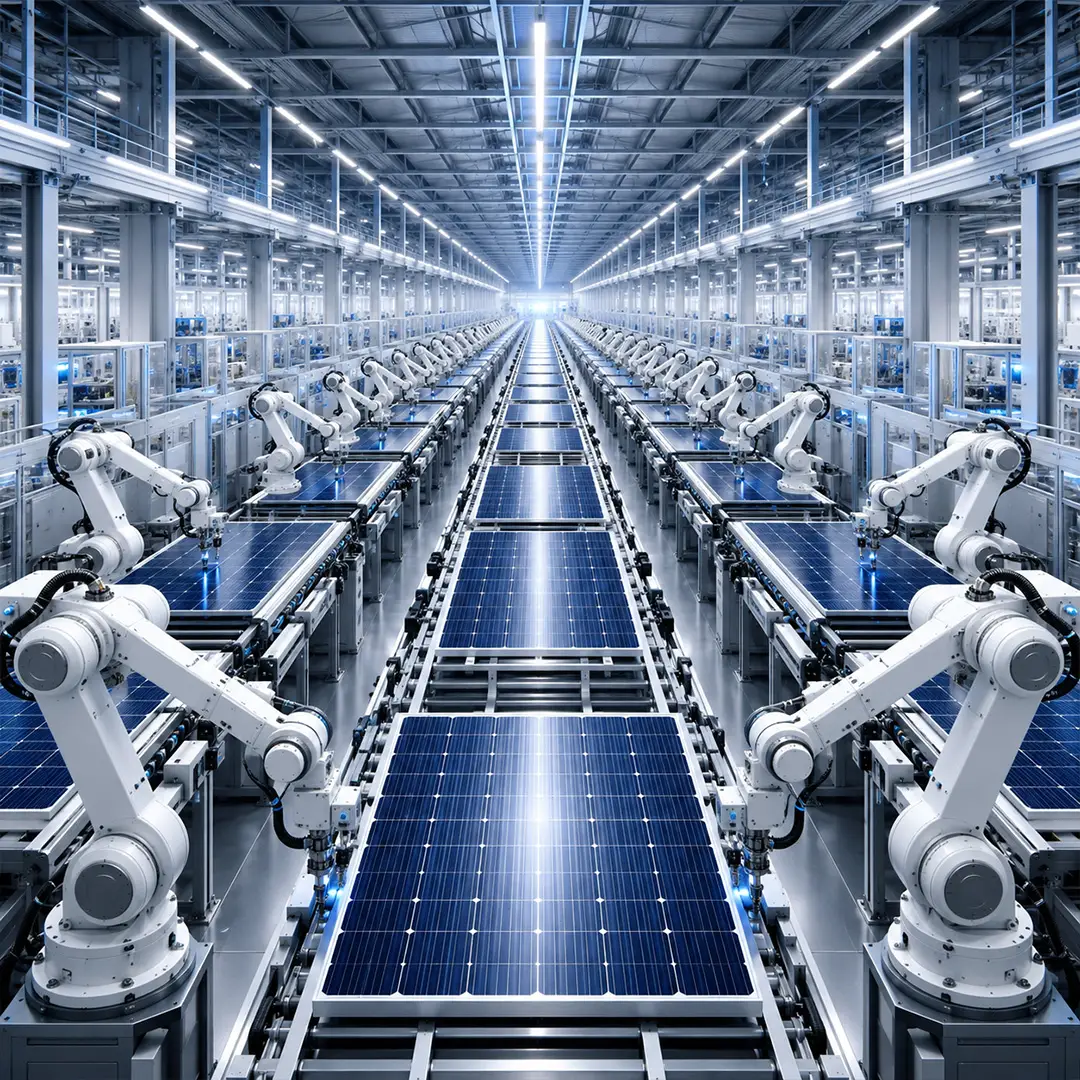
At the same time, factories are becoming more automated and technology-driven.
Modern solar manufacturing facilities are increasingly using:
- AI-based quality inspection
- Automated production lines
- Smart testing systems
- Precision manufacturing technologies
- Real-time performance monitoring
Manufacturing today is becoming faster, smarter, and far more quality-focused than before.
Solar Manufacturing Is Becoming an Economic Growth Story
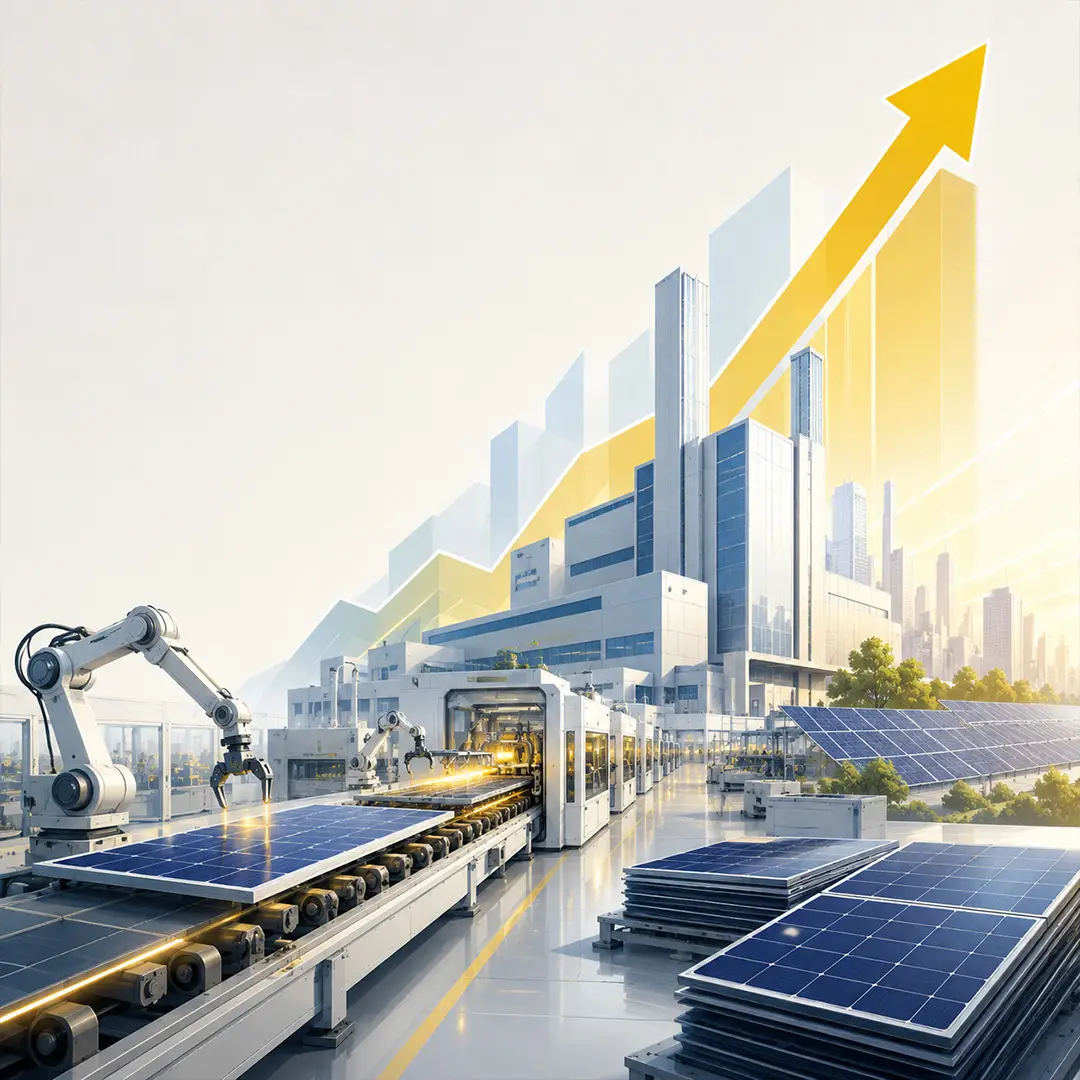
The rise of solar manufacturing is no longer just about sustainability or clean energy targets.
It is becoming an economic opportunity for India.
As domestic demand increases and export opportunities grow, the sector is contributing to:
- Industrial expansion
- Job creation
- Export growth
- Infrastructure development
- Energy security
India’s long-term renewable energy targets are also creating confidence for manufacturers to expand production capacities aggressively.
At the same time, international markets are increasingly looking toward India for reliable solar manufacturing partnerships.
Global buyers now expect:
- High manufacturing standards
- Reliable long-term performance
- Large-scale production capabilities
- Stable supply chains
- International certifications
This creates a major opportunity for Indian manufacturers to strengthen their presence globally.
Competition Inside the Industry Is Increasing
While the industry is growing rapidly, competition is also becoming more intense.
Manufacturers are now facing pressure to balance:
- Lower production costs
- Faster technology upgrades
- Better module efficiency
- Global pricing competition
- Quality expectations
This means companies can no longer compete only on volume.
Manufacturers that invest in advanced technology, operational efficiency, and product reliability are more likely to stay competitive in the long run.
The market is slowly shifting from quantity-focused manufacturing to performance-focused manufacturing.
What Makes 2026 Different?
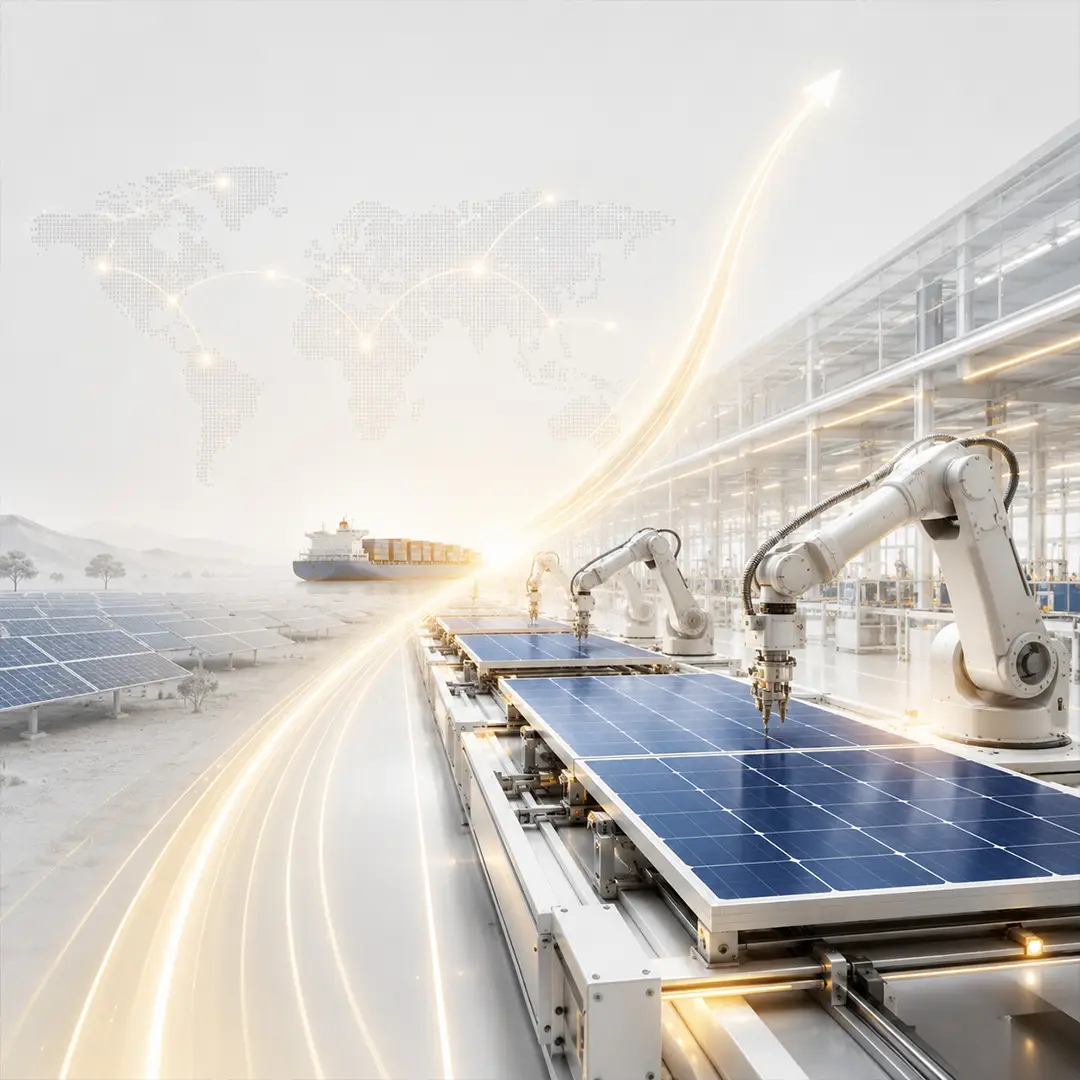
India’s solar sector has been expanding for years, but 2026 feels like a turning point because the industry’s focus has changed completely.
Earlier Focus:
- Solar installations
- Capacity additions
- Project expansion
2026 Focus:
- Domestic manufacturing
- Advanced solar technologies
- Integrated factories
- Export readiness
- Global competitiveness
India is now moving from being a large solar market to becoming a serious solar manufacturing economy.
Final Thoughts
India’s solar manufacturing industry is entering one of its most important phases yet.
The sector is no longer growing only through installations. It is now evolving through manufacturing expansion, technological advancement, and industrial development.
From Gujarat’s rapidly expanding manufacturing ecosystem to the adoption of next-generation technologies like TOPCon, the industry is becoming more ambitious and globally competitive.
The biggest shift in 2026 is clear: India is no longer just consuming solar technology; it is preparing to manufacture it for the world.