What happens after 25+ years of solar panels?
Solar panels are often marketed as a 25+year investment , a promise of long-term savings, sustainability, and energy independence. But one important question remains underexplored:
What actually happens after those 25 years?
Do solar panels stop working? Do they need to be replaced? Or can they continue generating
power beyond their “lifetime”?
This article breaks down the technical reality behind solar panel lifespan, degradation,
performance after 25 years, and what homeowners and businesses should expect in the long
run.
Understanding the “25-Year Lifespan” Myth
The widely quoted 25-year lifespan of solar panels is not an expiration date. It is a performance warranty benchmark
Most solar manufacturers guarantee that after 25 years, panels will still operate at
approximately 80%–85% of their original efficiency. This is known as the performance
degradation curve
In simpler terms:
- Solar panels don’t stop working after 25 years,
- They just produce slightly less electricity than when they were new.
The Science of Solar Degradation
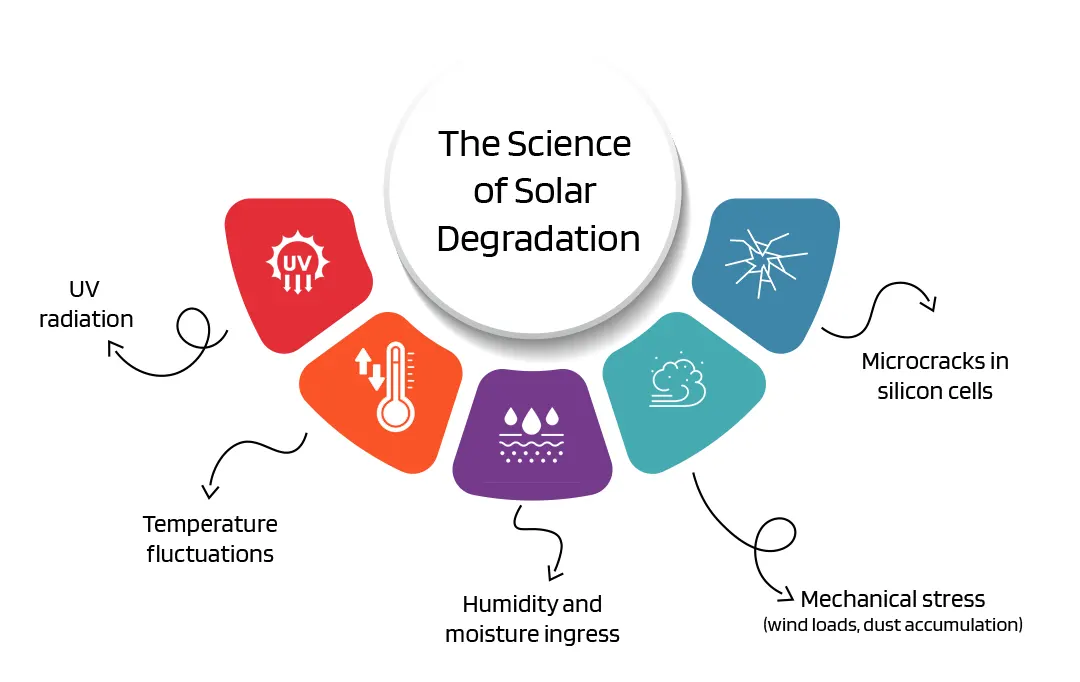
Solar panels degrade due to continuous exposure to environmental and operational stress
factors, such as:
- UV radiation
- Temperature fluctuations
- Humidity and moisture ingress
- Mechanical stress (wind loads, dust accumulation)
- Microcracks in silicon cells
This gradual reduction in output is measured as the annual degradation rate , typically ranging
between 0.4% to 0.7% per year for high-quality modules.
Example:
A panel with a 0.5% annual degradation rate will perform at:
- ~97.5% efficiency after 5 years
- ~90% after 20 years
- ~85% after 25 years
Advanced modules using technologies such as Mono PERC, TOPCon, or HJT often exhibit
lower degradation rates and improved long-term stability.
What Happens After 25 Years?
After the 25-year mark, solar panels enter a post-warranty operational phase, where
performance depends on quality, maintenance, and environmental conditions.
1. Panels Continue Generating Power
Contrary to popular belief, solar panels do not shut down after 25 years. They continue
producing electricity, often for 30–40 years or more.
However
- Output will be reduced compared to the initial capacity
- Efficiency decline becomes more noticeable over time
For many systems, even at 75–80% efficiency, energy generation remains economically
valuable.
2. Efficiency Becomes the Key Consideration
At this stage, system owners evaluate:
- Whether the reduced output meets their energy needs
- Whether upgrading to newer, higher-efficiency modules makes financial sense
With rapid advancements in solar technology, modern panels may offer significantly higher
wattage within the same footprint.
Do Solar Panels Need to Be Replaced After 25 Years?
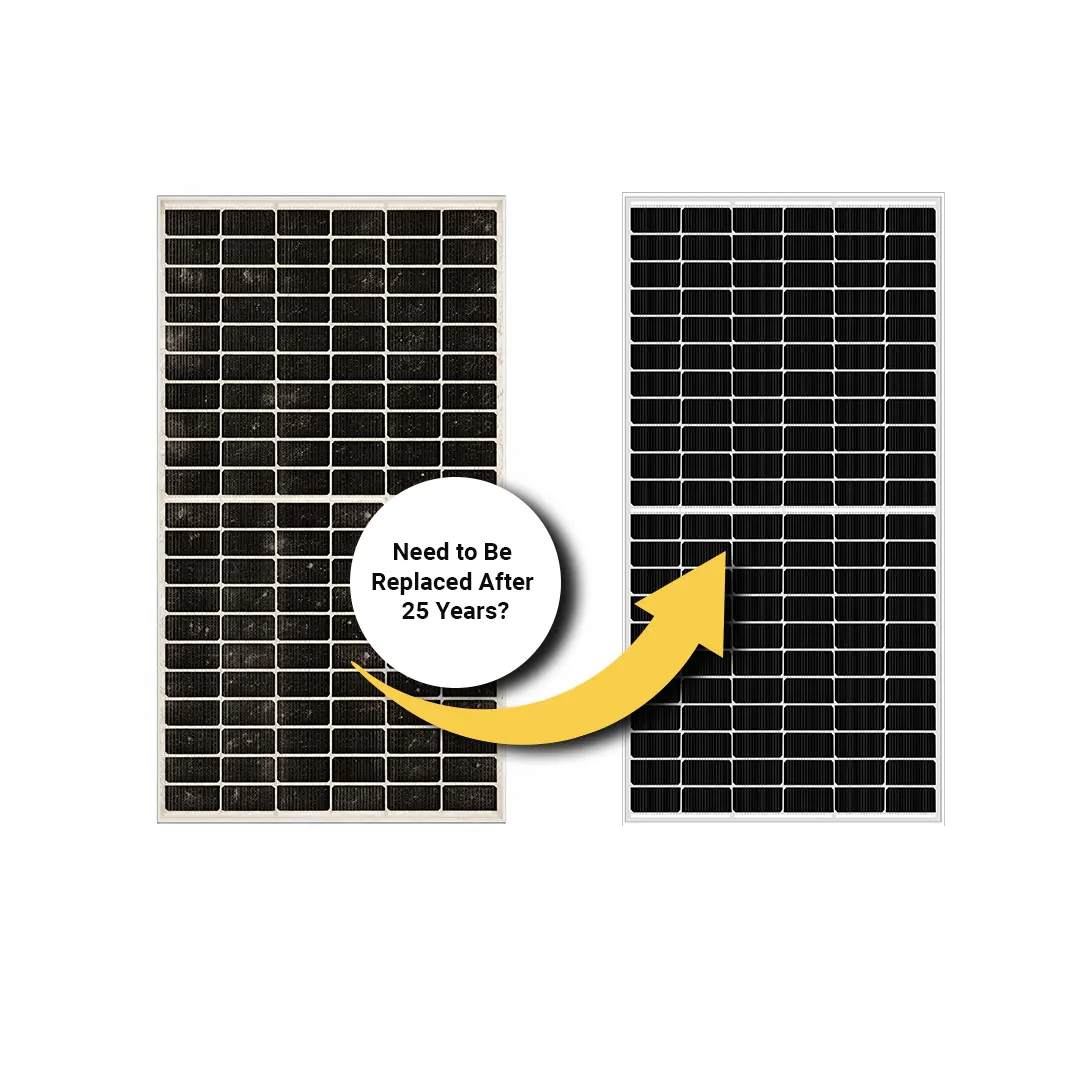
Not necessarily.
Replacement depends on three key factors:
1. Performance vs Requirement
If the system still meets your energy demand, replacement may not be required.
2. Financial Viability
If new panels offer significantly higher efficiency and faster ROI, upgrading may be beneficial.
3. Physical Condition
Panels with visible damage, delamination, or severe degradation may need replacement.
In many cases, solar systems continue to operate efficiently beyond their warranty period
without immediate replacement.
What About Solar Panel Recycling?
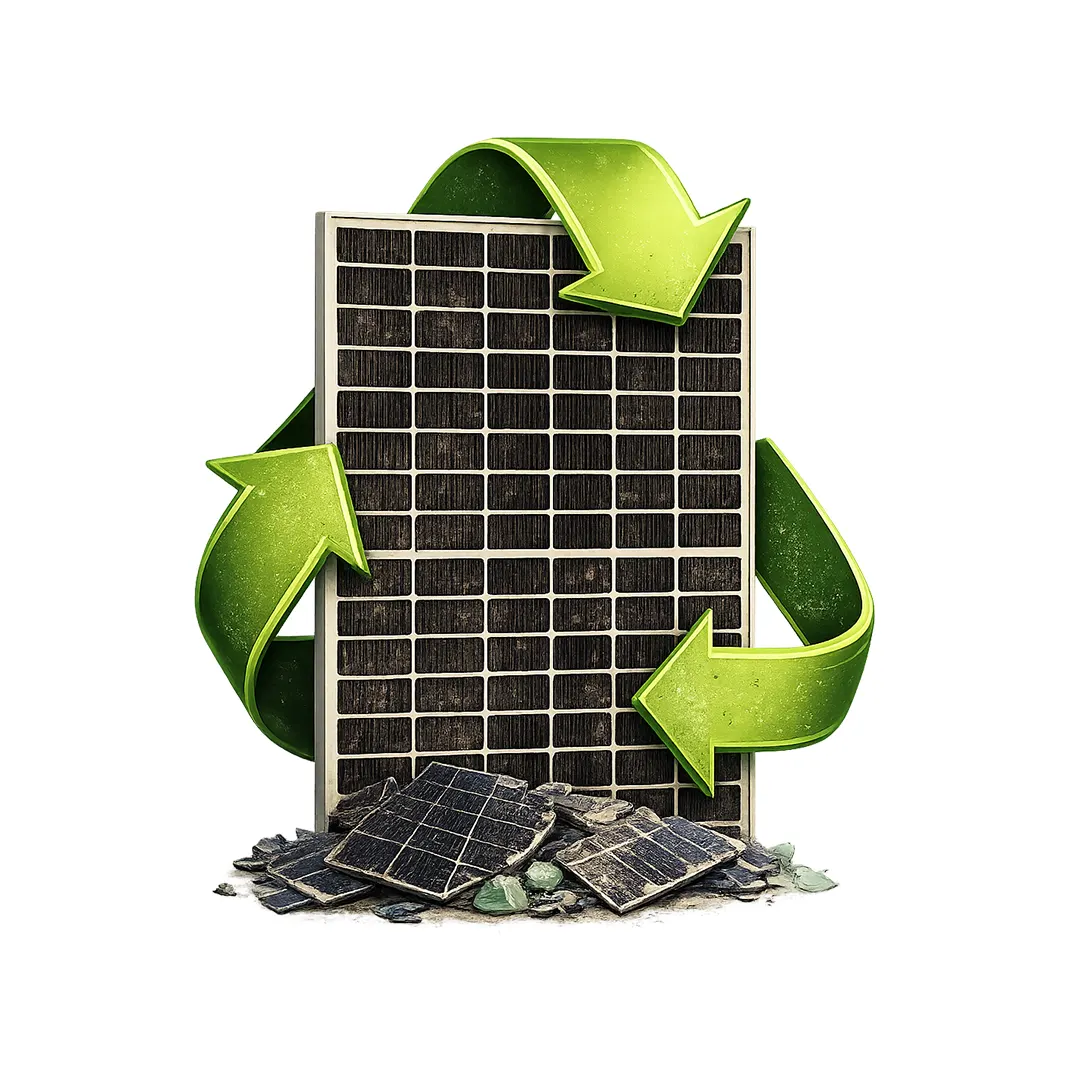
As solar adoption increases, the importance of end-of-life management grows.
Modern solar panels are largely recyclable, with recoverable materials such as:
- Glass
- Aluminum
- Silicon
- Copper
India is gradually building infrastructure for solar recycling, aligning with global sustainability
goals.
Responsible disposal and recycling ensure that solar energy remains a truly green solution
across its lifecycle.
How Technology Is Improving Longevity
Modern solar manufacturing has significantly enhanced module durability and lifespan through:
- Improved cell architecture (TOPCon, HJT)
- Better encapsulation materials
- Anti-reflective and anti-soiling coatings
- Enhanced resistance to PID (Potential Induced Degradation)
- Advanced quality testing protocols
These innovations result in:
- Lower degradation rates
- Higher energy yield over time
- Greater reliability in diverse climatic conditions
Designing for 30+ Years: A Strategic Approach
For long-term solar success, system design must go beyond just installation.
Key considerations include:
- Selecting high-quality, bankable manufacturers
- Optimizing system design for maximum efficiency
- Ensuring proper installation practices
- Regular monitoring and maintenance
- Planning for future scalability
A well-designed system today can deliver consistent performance for decades.
Final Thoughts
The idea that solar panels “expire” after 25 years is a misconception.
In reality:
- They continue generating electricity beyond their warranty period
- Performance gradually declines, but remains useful
- Upgrades and repowering can enhance system output
- Recycling ensures sustainability at the end of life
Solar is not just a 25-year solution — it is a long-term energy asset.
Looking Ahead
As technology advances and manufacturing quality improves, the next generation of solar
panels is expected to deliver:
- Longer operational lifespans
- Lower degradation rates
- Higher efficiency output
For homeowners and businesses alike, investing in solar today means securing energy stability
for decades to come.