The June 2026 Mandate: Navigating the Strategic Transition to Domestic Solar Cell Integration
The Indian solar energy sector is undergoing a pivotal regulatory shift that is redefining project compliance standards and national energy security. As of June 1, 2026, the industry is transitioning from a focus on local module assembly to a mandate requiring the integration of domestically manufactured solar cells. This shift, governed by the Approved List of Models and Manufacturers (ALMM) List-II, represents a fundamental change in how solar assets must be engineered and procured.
Defining the Regulatory Scope: What is Changing?
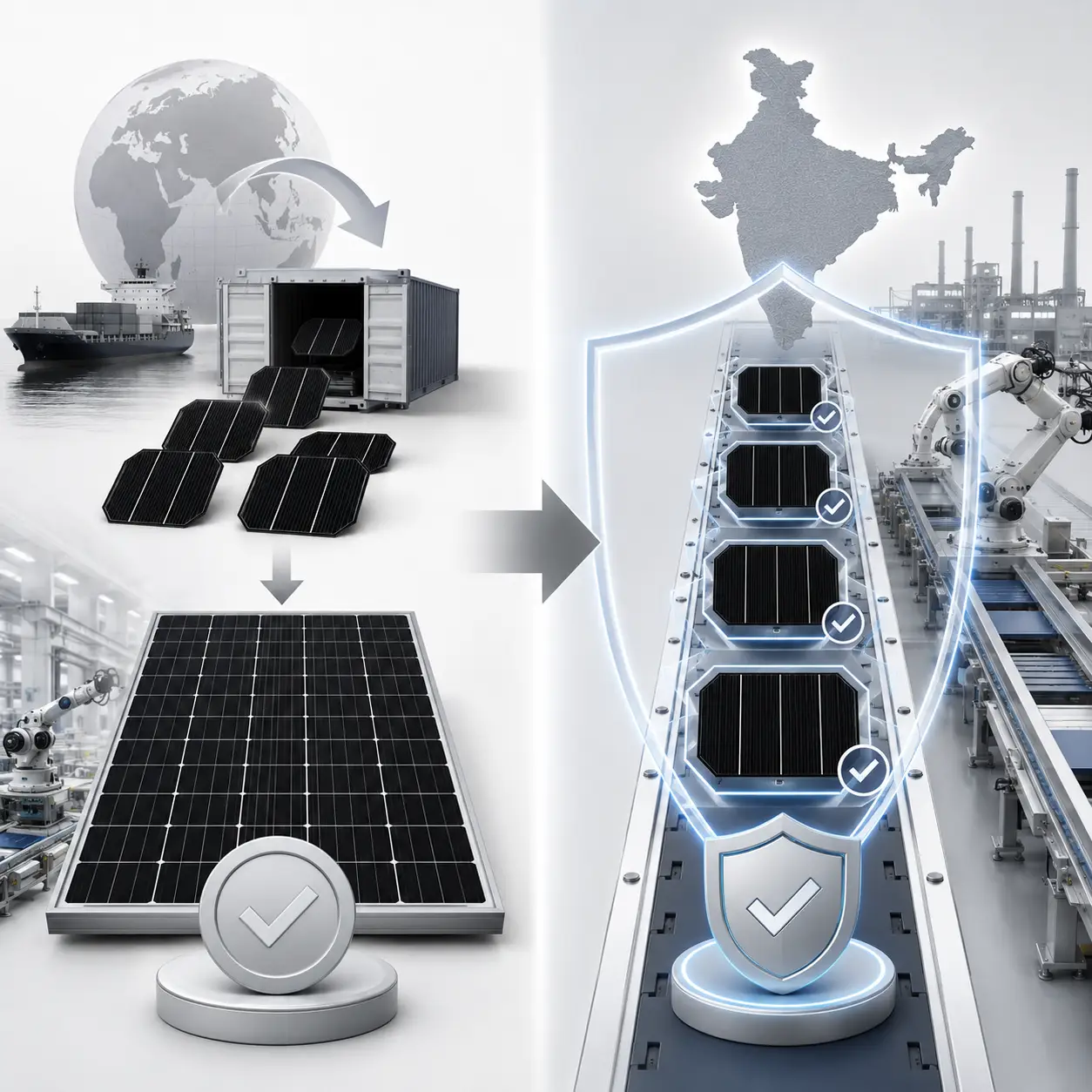
For several years, the industry operated under ALMM List-I, which ensured that the final solar panels were assembled within certified Indian facilities. However, the “June 2026 Mandate” introduces List-II, which targets the “engine” of the panel, the solar cell.
Under this new legal framework, individual solar cells must be produced by domestic entities certified by the Ministry of New and Renewable Energy (MNRE). While previous regulations allowed modules to be labeled “Made in India” even if they contained imported cells, any project requiring government compliance after the June deadline will be deemed non-compliant if it utilizes imported cell technology.
Identifying the Stakeholders: Who Must Comply?
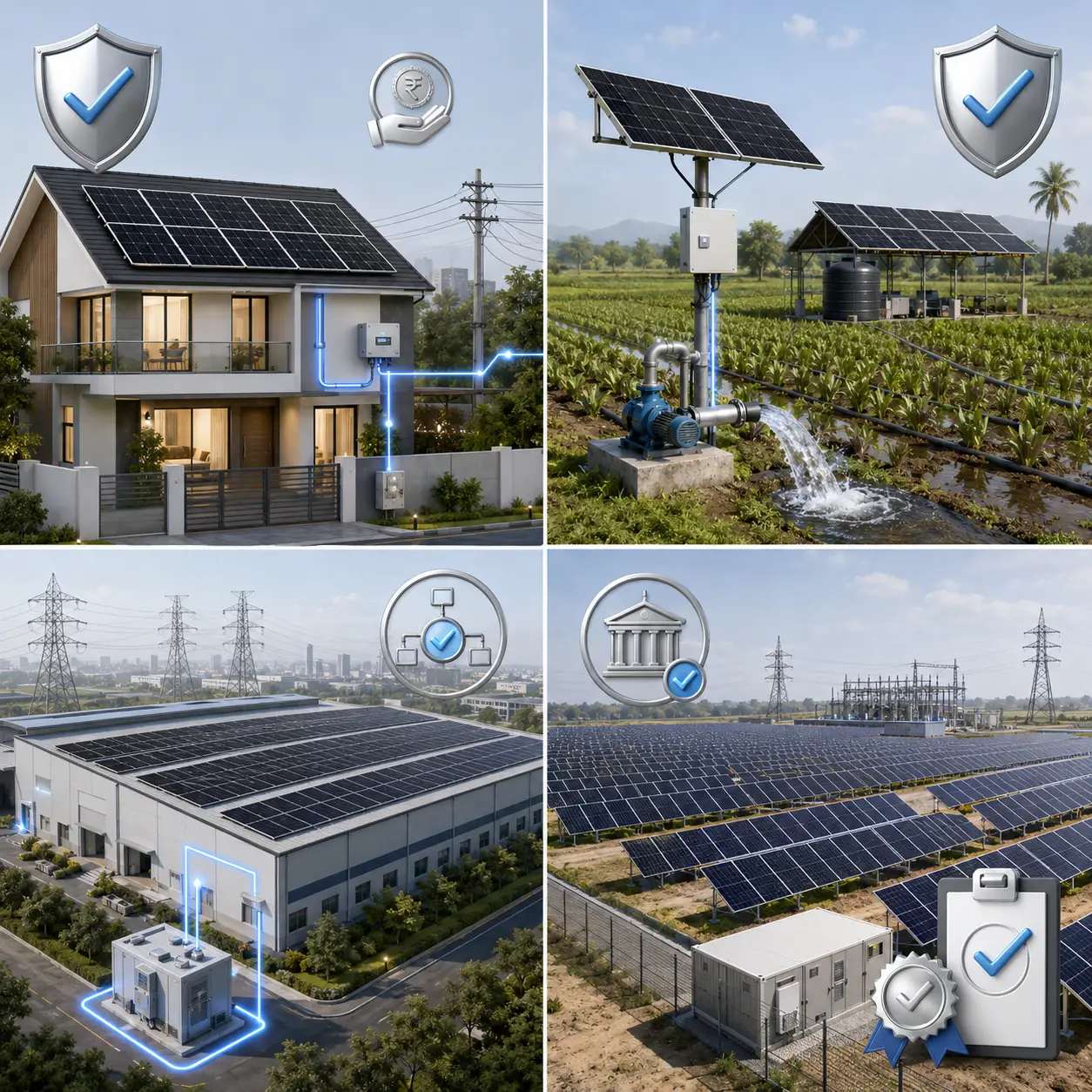
The mandate is not limited to large-scale utility plants. It encompasses any project that uses the public grid or receives government financial support.
This includes:
- Residential Sector: All subsidized installations under the PM Surya Ghar scheme must use List-II-compliant cells to trigger subsidy disbursements
- Agricultural Initiatives: Solar pumps and feeder plants under the PM-KUSUM scheme are strictly bound by these Domestic Content Requirements (DCR).
- Commercial & Industrial (C&I): Any project utilizing Net-Metering or Open Access must ensure all components are ALMM-approved to maintain grid connectivity.
- Public Tenders: All CPSU and SECI-led tenders now mandate the use of List-II cells for project commissioning.
The Timeline and Logic: Why and When?

The June 1, 2026, deadline catalyzes Atmanirbhar Bharat (Self-Reliant India), protecting national energy infrastructure from the volatility of global supply chains. By mandating that the core technology is built within domestic borders, India ensures long-term energy independence and high-performance reliability.
Technical Superiority and the “Fifth Pillar” of Quality

This transition is more than a geographic shift; it is a technological leap. Most domestic cell lines qualifying for List-II are optimized for N-Type TOPCon (Tunnel Oxide Passivated Contact) technology. This technology offers several distinct advantages:
- Enhanced Efficiency: Domestic cells are now achieving efficiency benchmarks of 24% and above.
- Stable Power Output: N-Type cells are inherently resistant to Light Induced Degradation (LID), ensuring stable performance over a 25-year lifecycle.
- Bifaciality: New domestic cells offer higher bifaciality factors, generating more power from reflected light, which is critical for large-scale commercial installations.
In addition to these technical specs, a new standard for Operational Accountability has emerged. Beyond the traditional pillars of operational maturity, proven reliability, and scale, international and domestic buyers now demand:
End-to-End Traceability: Manufacturers must provide a Traceability Certificate for every batch, tracking the component from the silicon wafer stage to the final module to ensure legal compliance.
Strategic Procurement: Securing the Supply Chain

The primary challenge currently facing the industry is the capacity gap. While module assembly capacity is extensive, domestic cell manufacturing is still scaling to meet demand, creating a potential “bottleneck risk” as the June 2026 deadline nears.
To ensure project success, EPC (Engineering, Procurement, and Construction) firms and developers should implement the following safeguards:
1. Advance Contracting
Supply contracts should be locked in at least six months in advance to avoid the Q2 2026 demand spike.
2. Contractual Clauses:
Procurement agreements should explicitly include “List-II Compliance” as a condition for final payment to mitigate immense financial liabilities.
Conclusion: A New Era of Energy Independence
The implementation of ALMM List-II marks a milestone in India’s journey toward a 500 GW renewable capacity target by 2030. For the solar professional, this mandate is an opportunity to deliver premium, high-efficiency products that are legally secure and backed by domestic warranties. By embracing these rigorous standards, the Indian solar ecosystem is proving its resilience and securing a future defined by technical excellence and international trust.